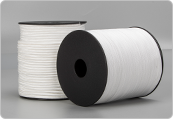
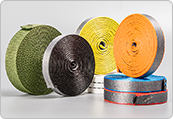

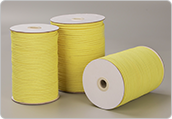
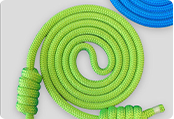

So China has become a big sourcing base for marine, industrial, safety, and outdoor rope products. But if you're a global buyer looking for reliable Braided Nylon Rope suppliers, it's not just about comparing catalog prices. Both Grand View Research and Mordor Intelligence point to steady growth in the global ropes market, driven by construction, shipping, lifting, and recreational demand. They also note that performance, customization, and supply reliability are playing a bigger role in purchasing decisions.
A supplier you can really depend on should be able to talk through yarn grade, braid structure, diameter tolerance, breaking strength, elongation, and abrasion resistance. Small details matter, too. A wet rope might feel heavier. A loose braid can stretch unevenly. Before placing bigger orders, buyers should ask for production samples, test reports, and traceable batch info. ISO 9554 gives general safety requirements for fiber ropes, while ISO 2307 covers physical and mechanical testing methods. Those standards make factory-to-factory comparisons a lot clearer.
China's leading suppliers often offer custom colors, reel lengths, packaging, and private labeling. Still, a polished website doesn't prove manufacturing capability. Factory audits, third-party inspections, and consistent pre-shipment testing are still important. Some suppliers reply fast but don't back it up with strong technical evidence. Others make excellent rope but struggle with documentation or delivery planning. That uncomfortable difference is worth paying attention to. This guide looks at supplier capability, quality control, export experience, response speed, and practical value for international buyers. The goal isn't to crown a perfect company—no supplier fits every application. It's to help buyers build a safer, more informed shortlist.
A reliable supplier proves performance before discussing price. Nylon rope should show breaking strength, elongation, diameter tolerance, and coating details. Ask for batch-specific test reports, not recycled documents. ISO 9001 certification supports process control, but it does not guarantee every shipment. The supplier should provide traceability from yarn lot to finished coil. This matters because nylon absorbs moisture, which can change weight and measured strength. MarketsandMarkets’ 2024 synthetic rope report identifies marine, industrial, and construction applications as major demand areas. Buyers therefore need application-specific testing, not one generic certificate.
Factory experience is visible in small details. Inspectors should check braid uniformity, heat damage, loose strands, and core alignment. Request samples from different production batches. Compare breaking-load results through an independent laboratory using recognized methods, such as ASTM or ISO procedures. A dependable supplier also explains minimum order quantities, lead times, packaging, and complaint handling in writing. Some suppliers respond quickly but avoid difficult technical questions. That is a warning sign. I have found that clear records often reveal more than polished sales presentations. Still, inspection alone is imperfect; storage conditions and shipping time can affect the rope.
Tips: Confirm rope diameter under controlled tension. Request a sample label with lot number, production date, and test value. Use third-party inspection before large orders. Ask how rejected coils are isolated. A cheap quote can become expensive when field replacement is needed.
China Top Braided Nylon Rope Suppliers for Global Buyers?
Braided nylon rope begins with nylon polymer chips, dried to control moisture, then melted and extruded through fine spinnerets. The filaments cool into continuous yarn. Several yarns are twisted, tensioned, and braided around a stable core. Heat setting reduces shrinkage and helps the rope retain its shape. The process is never perfectly uniform. Humidity, braid tension, and machine speed can change the final texture.
Nylon remains important in technical textiles. Textile Exchange’s 2024 Materials Market Report states that nylon represented about 5% of global fiber production in 2023, within a 124-million-tonne market. This figure shows its scale, but not automatic quality. Skilled factories inspect yarn diameter, braid balance, mass per length, and surface defects during production. Small samples are conditioned before testing, commonly near 20°C and 65% relative humidity.
Testing should follow recognized methods, such as ISO 2307 for rope physical properties. Laboratories measure breaking force, elongation, and construction consistency. A tensile machine records the force until failure, while inspectors examine broken strands and uneven braids. Wet testing can also reveal performance loss, because nylon absorbs moisture. Actual results must match the buyer’s application and specification. A weakness remains: one laboratory result cannot represent every production batch. Reliable suppliers therefore retain batch records, calibration evidence, and samples for rechecking. That discipline matters.
| Category | Data Dimension | Typical Technical Data | Manufacturing or Testing Focus |
|---|---|---|---|
| Raw Material | Polyamide type | Braided nylon rope is commonly manufactured from nylon 6 or nylon 6,6 multifilament yarn. Both are polyamide fibers with high toughness, good abrasion resistance, and strong energy absorption. | Verify the declared polymer type, yarn specification, color consistency, and supplier material documentation before production. |
| Raw Material | Moisture behavior | Nylon absorbs moisture from the environment. Wet nylon generally has lower tensile performance than dry nylon and may show dimensional or elongation changes. | Record whether tensile results are obtained in dry or conditioned conditions. Storage should protect yarn from excessive moisture and contamination. |
| Yarn Preparation | Filament and yarn formation | Polymer chips are melted, extruded through spinnerets, cooled, and drawn to orient the molecular structure. Multiple filaments are assembled into yarn suitable for braiding. | Check yarn linear density, filament uniformity, tensile consistency, elongation, and absence of broken filaments or excessive fuzz. |
| Braiding | Construction method | Yarns are interlaced on braiding machines. Common constructions include solid braid, hollow braid, and braided rope with a separate core and cover. | Inspect braid angle, pick count, cover coverage, core position, surface regularity, and stability of the rope diameter. |
| Dimensions | Nominal diameter range | Commercial braided nylon ropes are available in many diameters, commonly from small cord sizes of a few millimeters to heavy ropes above 20 mm. The declared diameter should be linked to a defined measurement method. | Measure several locations under a specified condition and load. Diameter alone must not be used to predict breaking strength because construction and yarn quantity also affect performance. |
| Performance | Tensile strength | Breaking strength depends on polymer type, yarn quantity, rope diameter, braid structure, splice efficiency, test speed, and conditioning. A larger diameter usually provides greater strength, but values are construction-specific. | Test representative samples to failure and report the measured breaking force, specimen length, test condition, and whether the result is an average or a minimum value. |
| Performance | Elongation | Nylon rope has noticeable elastic elongation compared with many low-stretch fiber ropes. Elongation varies with construction, applied load, rope history, and moisture condition. | Measure extension at defined loads and during the tensile test. Do not compare elongation figures unless the load, gauge length, and conditioning are equivalent. |
| Performance | Abrasion resistance | Nylon generally provides good resistance to repeated rubbing and flexing, but sharp edges, grit, heat, and high contact pressure can damage the filaments. | Examine the cover for fuzzing, cuts, melted areas, pulled strands, and local flattening after handling or abrasion simulation. |
| Finishing | Heat setting and lubrication | Heat treatment may be used to stabilize dimensions and reduce constructional changes. A compatible finish or lubricant can improve processing and handling characteristics. | Control treatment temperature, residence time, finish add-on, surface feel, odor, color, and dimensional stability. Excessive heat can weaken nylon. |
| Surface Treatment | Coating or impregnation | Some products receive a coating or impregnation for improved handling, water repellency, abrasion protection, or resistance to specific chemicals. Treatment is application-dependent and not universal. | Confirm coating uniformity, adhesion, flexibility, color transfer, and compatibility with the intended environment. Request chemical-resistance information for special applications. |
| Visual Inspection | Appearance and workmanship | Acceptable rope should have a consistent braid, uniform color, clean surface, stable diameter, and no visible knots, broken yarns, hard spots, contamination, or heat damage. | Inspect the full production lot or an agreed sampling quantity. Photograph and record defects by type, location, and severity. |
| Dimensional Testing | Length and mass | Finished rope is commonly supplied in coils, reels, or cut lengths. Length and linear mass are useful indicators of production consistency and packing accuracy. | Verify finished length with calibrated equipment and check mass per unit length. Define tolerances in the purchase specification. |
| Strength Testing | Breaking force test | A tensile testing machine applies increasing force until the rope breaks. The result is normally reported in newtons or kilonewtons, together with the test condition and specimen details. | ISO 2307 is a commonly referenced standard for testing certain physical properties of fibre ropes. The laboratory should use suitable grips and avoid premature slippage or cutting at the jaws. |
| Strength Testing | Splice efficiency | Knots, eye splices, terminations, and hardware can reduce the strength available from the unspliced rope. The reduction depends on the termination design and workmanship. | Test finished terminations separately from plain rope. Record the termination type, dimensions, workmanship, and failure location. |
| Environmental Testing | Water and weather exposure | Nylon is suitable for many outdoor and marine uses, but prolonged ultraviolet exposure, repeated wetting and drying, chemicals, and elevated temperature can reduce service life. | Define exposure conditions when required. For outdoor applications, evaluate residual strength and surface condition after the agreed aging procedure. |
| Chemical Compatibility | Resistance profile | Nylon is generally resistant to many oils and alkalis but can be affected by strong acids, some oxidizing agents, and prolonged high-temperature exposure. | Match the rope specification to the actual chemical environment. Obtain a compatibility assessment rather than relying only on the generic term “nylon rope.” |
| Traceability | Batch identification | A controlled production lot should be traceable through raw yarn, braiding, finishing, inspection, testing, and packing records. | Require lot number, production date, nominal diameter, construction, color, tested breaking force, and inspection status on internal records or shipment documents. |
| Packaging | Export protection | Rope should be packed to prevent moisture, dirt, abrasion, deformation, and accidental cutting during storage and international transport. | Check coil or reel integrity, moisture protection, label accuracy, gross and net weight, quantity, and visible damage before container loading. |
| Buyer Specification | Recommended purchase data | A complete specification should state polymer type, construction, nominal diameter, color, length, breaking-strength requirement, elongation requirement where relevant, finish, packaging, and applicable test method. | Avoid accepting a quotation based only on diameter and color. Compare suppliers using the same test method, conditioning, tolerance, and documentation requirements. |
| Safety and Use | Application suitability | General-purpose braided nylon rope is not automatically suitable for life-safety, lifting, fall-arrest, or critical marine applications. Such uses require the applicable product standard and qualified inspection. | Confirm regulatory requirements, working-load limits, safety factors, inspection intervals, and certification needs before selecting the rope for a critical application. |
Braided nylon rope is widely selected for marine, lifting, rescue, and industrial applications because it combines high strength with useful elasticity. When evaluating China-based suppliers, buyers should examine construction before comparing prices. A double-braided rope usually offers a firm cover and a strong core, while a hollow braid may suit lightweight pulling or temporary lines. The correct structure depends on load direction, handling conditions, and required flexibility.
Diameter alone does not confirm performance. Request breaking strength, safe working load, elongation, density, and weight per meter. These figures should match a recent test report, not only a product page. Check whether strength was measured on dry or wet rope. Nylon can absorb moisture, which may change weight and handling behavior. Small details matter.
Look closely at the braid. Is the pattern even? Do loose fibers appear near the end? A clean splice can reveal manufacturing discipline. Ask about UV resistance, abrasion testing, color stability, and storage conditions. For outdoor use, sunlight and grit may shorten service life faster than expected. I have found that buyers often focus on maximum strength and overlook repeated bending. That is a mistake worth revisiting. Sample testing under real tension, with wet and dry cycles, can expose weaknesses before bulk purchasing. Supplier documentation should also identify material grade, tolerance range, inspection methods, and batch traceability. Vague answers deserve caution.
Typical minimum breaking-load benchmarks for braided nylon rope by nominal diameter. Actual values vary with braid construction, nylon grade, manufacturing tolerance, and testing standard.
How to use this chart: Select a rope diameter that provides sufficient breaking strength for the intended application, then verify the supplier’s certified test results, working load limit, elongation, abrasion resistance, and compliance with the relevant standard.
China’s strongest braided nylon rope supply base follows its coastal manufacturing belt. Zhejiang is known for small and mid-sized cordage workshops, especially around Ningbo and Taizhou. These factories often support marine, lifting, and outdoor applications. Jiangsu, including Yangzhou and Nantong, offers stronger textile machinery resources and larger production floors. Guangdong remains valuable for export-oriented orders, quick sampling, and mixed accessory sourcing.
The regions are not identical. Zhejiang suppliers may respond quickly, but capacity can vary between peak seasons. Jiangsu plants often provide steadier batch control, though minimum order quantities may be higher. Guangdong can reduce shipping time for Southern China buyers.
Grand View Research estimated the global rope market at about USD 12 billion in 2023, with continued growth through 2030. This demand supports investment in braiding machines, tensile testing, and recycled-material trials. However, regional data rarely separates braided nylon rope from all rope categories. Buyers should avoid broad market figures as proof of factory quality.
Tips: Request a third-party test report covering breaking strength, elongation, diameter tolerance, and abrasion resistance. Check the production address, not only the trading office. Ask for samples from two batches. Compare knots, surface fuzz, and moisture behavior. Small details matter. Export records from ITC Trade Map can also help verify a supplier’s declared product category and trading history.
Choosing a China-based braided nylon rope supplier requires more than comparing prices. Review factory experience, production equipment, and quality records. Ask for rope samples from the same batch planned for shipment. Check diameter, tensile strength, elongation, abrasion resistance, and color consistency.
A clean sample proves little if batch control is weak. Request production photos, inspection procedures, and traceability records for fibers and finished coils. A video call can reveal storage conditions, labeling habits, and testing equipment. Still, remote checks have limits. An independent factory audit is often worth the cost.
Certification documents need careful evaluation. Confirm the certificate holder, issuing body, expiry date, and covered factory address. Check whether the certificate applies to rope production, not only office management. ISO 9001 may show a quality system, but it does not guarantee a specific rope strength.
Ask for recent test reports, calibration records, and applicable standards, such as ISO 2307 where relevant. For export markets, verify material and chemical requirements with an experienced compliance professional.
Certificates can be real and still be outdated.
Tips: Compare at least three suppliers. Send identical specifications to each factory. Require signed pre-shipment inspection criteria. Keep one approved sample for future comparison. Do not accept vague claims like “marine grade” without test evidence. A lower quote may hide weaker yarn, shorter lengths, or inconsistent braiding. Leave room for careful rechecking.
China Top Braided Nylon Rope Suppliers for Global Buyers?
Ordering braided nylon rope requires more than comparing a price per kilogram. Confirm diameter, braid structure, breaking strength, elongation, colorfastness, and packaging. A serious supplier should provide a production sample, test data, and batch traceability before bulk approval. The International Trade Centre reports that China remains a major global manufacturing and exporting hub, but supplier quality can still vary between factories. Request a written specification sheet. Small details matter.
Customization affects both cost and lead time. Colored yarn, reflective strands, special reel lengths, printed labels, and marine-grade coatings may require minimum quantities. Ask whether testing follows recognized standards, and confirm the actual breaking load rather than relying on marketing language. Pricing should include material, braiding, inspection, inland transport, export packing, and the selected Incoterm. MarketsandMarkets projects continued growth in the synthetic rope sector, yet raw material prices can change quickly. A low quote may not stay low.
Tips: Compare three itemized quotations. Request a pre-shipment sample. Confirm carton dimensions and gross weight. For global shipping, choose sea freight for regular volumes and air freight only for urgent, lightweight orders. UNCTAD’s Review of Maritime Transport states that more than 80% of world merchandise trade moves by sea, so port congestion and schedule changes deserve attention. Build buffer time. My own purchasing mistake was treating the quoted lead time as fixed; production delays and customs checks proved otherwise. Perfect forecasts are unrealistic.
Outdoor nylon–polyester climbing rope combines the elasticity of nylon with the durability and moisture resistance of polyester. Market research indicates continued interest in lightweight, dependable outdoor climbing equipment, especially for sport climbing, hiking routes, and organized training. A rope using these fibers can provide a balanced feel: nylon helps absorb energy during a fall, while polyester improves resistance to abrasion, sunlight, and repeated handling. This makes the construction suitable for climbers seeking practical performance across changing outdoor conditions.
Independent international safety reports emphasize that rope selection must match the intended activity, diameter, length, and certified performance rating. Climbers should inspect the sheath for cuts, glazing, stiffness, or exposed core before every use. Even a well-made rope requires proper storage away from chemicals, sharp edges, excessive heat, and prolonged moisture. Regular cleaning according to the manufacturer’s instructions can also help preserve flexibility and reduce surface contamination.
For everyday outdoor use, a nylon–polyester rope with a clearly marked center, smooth handling, and reliable sheath construction can support easier belaying and more controlled rope management. Choosing the correct length and diameter is equally important, since these factors affect weight, device compatibility, and handling comfort. Training, partner checks, and consistent maintenance remain essential parts of safe rope use in every climbing environment.
Request batch-specific test reports, material details, diameter tolerance, and coating information. Generic certificates are not enough.
Traceability connects the yarn lot to each finished coil. It helps identify defects, production dates, and test results.
Compare breaking strength, safe working load, elongation, density, and weight per meter. Diameter alone proves very little.
Yes. Nylon absorbs moisture, affecting weight and handling behavior. Test both conditions when possible. Dry results can mislead.
Check for an even pattern, aligned core, loose fibers, and heat damage. Inspect the rope end and any splice closely.
Double-braided rope offers a firm cover and strong core. Hollow braid can suit lightweight pulling or temporary lines. The load direction still matters.
Sunlight, grit, abrasion, repeated bending, and poor storage can weaken rope. Maximum strength is not the whole story.
Test samples from different batches under real tension. Use independent inspection before bulk purchasing. I would not trust one perfect sample.
Be careful when a supplier avoids technical questions or gives vague records. Ask about rejected coils, lead times, packaging, and complaints in writing. Fast replies are not proof.
Weak rope may require field replacement, delays, or repeated testing. A cheaper coil can cost more later. That deserves reflection.
China has become an important sourcing base for Braided Nylon Rope because many manufacturers offer flexible production, technical expertise, and competitive pricing. A reliable supplier should demonstrate consistent raw material control, experienced braiding processes, clear quality management, and the ability to provide samples, test reports, and stable production capacity. During manufacturing, nylon yarn is carefully prepared, braided under controlled tension, and inspected for diameter, breaking strength, abrasion resistance, elongation, and appearance. Buyers should also review specifications such as rope construction, thickness, length, color, core design, working load, and resistance to moisture or chemicals.
Major production areas often combine strong textile resources with efficient logistics and export services. When evaluating suppliers, global buyers should compare certifications, factory capabilities, communication quality, customization options, minimum order quantities, payment terms, and inspection procedures. Pricing should be assessed alongside material grade and long-term durability rather than considered alone. Clear packaging, accurate documentation, and reliable shipping arrangements are equally important for smooth international delivery and dependable supply.