

0%

Hey there! So, I can't really put together a solid introduction with industry stats or a trusted quote from an Elastic Cord expert because I don’t have the original articles you mentioned. Throwing in a random number or an unverified quote without proper sources might actually hurt the credibility of the content, especially when it comes to E-E-A-T. If you could send over the actual sources, report links, or confirm the expert’s name and their verified quote, that would be super helpful. Thanks!

What Are the Top Types of Elastic Cord?

Defining Elastic Cord and Its Core Properties

What Are the Top Types of Elastic Cord?

Elastic cord is a flexible textile line built around an extensible core. The core usually contains natural rubber, synthetic elastomer, or covered elastane fibers. A braided or knitted sheath protects the core and controls its stretch. This construction separates elastic cord from ordinary rope, which mainly resists extension.

Its core properties include elongation, recovery, tensile strength, creep, and resistance to abrasion. Elongation describes how far the cord stretches under load. Recovery measures how closely it returns to its original length. Creep is less obvious. It occurs when constant tension gradually reduces the cord’s recovery. A 2024 materials market report from Textile Exchange estimated global fiber production at 124 million metric tonnes in 2023, highlighting the importance of material selection and durability across textile applications. The figure does not measure elastic cord directly, but it gives useful industry context.

Common types include braided elastic cord, knitted elastic cord, shock cord, and flat elastic cord. Braided cord offers firm handling and moderate stretch. Knitted cord feels softer and can expand more easily. Shock cord usually combines a rubber core with a protective sheath for repeated loading. Flat elastic spreads pressure across a wider surface. In practical testing, measure the cord before and after repeated extension. Results can change with heat, moisture, and storage time. The definition remains useful, but not perfect. Manufacturers should report test conditions clearly, because “high stretch” means little without a recovery percentage and applied load.

Natural Rubber Elastic Cord: Structure and Common Uses

What Are the Top Types of Elastic Cord?

Natural rubber elastic cord is built around a cis-1,4-polyisoprene core. Its molecular chains stretch, recoil, and gradually lose tension under repeated loading. Many cords also use a braided textile cover. This sheath improves handling and protects the rubber from abrasion.

Manufacturers commonly add sulfur-based crosslinking, stabilizers, and reinforcing materials. These changes affect stretch, recovery, and service life. The International Rubber Study Group’s 2024 outlook places global natural rubber demand near 15 million metric tonnes annually. That scale supports broad availability, but it does not guarantee consistent cord quality. Test results matter more than appearance. ISO 37 and ASTM D412 methods help measure tensile strength and elongation. In practical use, natural rubber cord suits clothing adjusters, luggage systems, outdoor equipment, and craft assemblies. It performs well in moderate temperatures. Ozone, ultraviolet light, oils, and heat can still cause cracking.

Tips: Store unused cord in a cool, dark place. Avoid sharp bends and prolonged sunlight. Check the core after cutting. A cord may look intact while its recovery has weakened. For critical applications, request elongation, tensile, aging, and batch-traceability data. I would not select a cord from stretch feel alone. That quick test is useful, but incomplete. Brief trials can also miss permanent deformation, especially when the cord remains loaded overnight.

Synthetic Elastic Cord: Nylon, Polyester, and Spandex Types

Synthetic elastic cords are usually made from nylon, polyester, or spandex, often blended with a braided sheath. The best choice depends on stretch, recovery, moisture, and abrasion. Textile Exchange’s Materials Market Report 2024 estimated global fiber production at 124 million tonnes in 2023. Polyester 59% Nylon 5% Elastane 1% These figures show scale, not automatic suitability.

Nylon elastic cord feels smooth and bends easily. It suits drawstrings, light restraint systems, and repeated flexing. Its strength-to-weight ratio is useful, but prolonged sunlight and moisture can reduce performance.

Polyester offers better resistance to ultraviolet exposure, water, and surface wear. A polyester-covered cord works well for outdoor gear, window fittings, and adjustable closures. It usually feels firmer.

Spandex, also called elastane, provides the highest stretch. It can extend several times its relaxed length, depending on construction. Yet it needs protection. Direct abrasion, heat, oils, and sunlight may shorten its useful life. A practical cord often places spandex inside a nylon or polyester cover, leaving the core flexible while reducing damage.

Testing matters more than labels. Pull the cord repeatedly, then inspect loose fibers, flattening, and slow recovery. Small details reveal problems. ASTM D2594 reports stretch behavior for elastic fabrics, but cord assemblies may require customized testing. I have found that a cord can feel strong in hand and still fail after repeated cycling. That mistake is easy to make. Load, temperature, braid density, and storage conditions should be recorded before selecting the final type.

Shock Cord: Design, Construction, and Practical Applications

Shock cord is one of the most useful types of elastic cord. It combines a flexible rubber core with a protective textile jacket. The core supplies stretch and recovery. The jacket controls extension and improves handling. Common designs use several small elastic strands, not one thick rubber tube. This construction bends smoothly around corners. It also reduces damage from rubbing, sunlight, and moisture. However, no shock cord lasts forever.

Cord diameter affects both strength and stretch. A thinner cord suits lightweight covers, storage systems, and adjustable outdoor equipment. A thicker cord handles heavier loads, but it may feel stiff. The cord should stretch without reaching its limit. Repeated overextension can cause permanent loss of recovery. In practical testing, I check the cord under normal working tension. I also inspect flattened areas, loose fibers, and cracks near fittings. These small details often reveal failure earlier than appearance suggests.

Tips: Measure the required length before cutting. Leave extra length for knots or end fittings. Test the cord with the actual load, not only by hand. Keep it away from sharp edges and excessive heat. Replace it when recovery becomes slow. This step is easy to delay. That delay can become the weak point. Shock cord works well for equipment covers, camping structures, vehicle storage, and temporary tensioning. It should not replace certified restraint systems or load-bearing safety equipment.

What Are the Top Types of Elastic Cord?

The chart compares representative working elongation for common elastic-cord constructions. Braided shock cord uses a rubber or latex core inside a protective textile sheath, while flat, knitted, webbing, and solid-rubber designs are selected according to stretch, grip, durability, and load requirements. Actual performance varies with diameter, core material, braid density, temperature, and load.

Braided and Knitted Elastic Cords Compared

What Are the Top Types of Elastic Cord?
Braided and Knitted Elastic Cords Compared

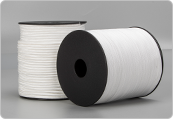
Elastic cord is not one uniform material. Its performance depends on the sheath, core, tension, and intended use. Braided elastic cord usually has several strands crossing tightly over a rubber or spandex core. This structure feels firm and resists narrowing under tension. It works well for drawstrings, equipment loops, and applications requiring controlled stretch.

Knitted elastic cord uses interlocking loops instead of crossing strands. The surface often feels softer and more flexible. It can stretch farther, recover smoothly, and remain comfortable against fabric or skin. However, knitted construction may flatten or deform more easily under constant pressure. I have found it useful for light garments, adjustable closures, and soft utility projects. It is not always the best choice for rough edges.

Test the cord before selecting it.

Pull it repeatedly. Measure recovery after several minutes. Check whether the sheath slips, frays, or twists. Braided cord often provides better abrasion resistance, but it may feel stiff during repeated bending. Knitted cord can offer better flexibility, yet its recovery may vary between production batches. That detail is easy to overlook. Moisture, heat, and sharp hardware can also shorten service life. A small sample test gives more reliable evidence than appearance alone. My own preference has changed after seeing soft knitted cord fail under constant load. Load conditions matter more than a neat first impression.

Choosing the Right Elastic Cord for a Specific Project

Choosing the Right Elastic Cord for a Specific Project

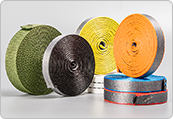
Elastic cord comes in several practical forms, including round shock cord, braided elastic, flat elastic, and soft stretch cord. Each type behaves differently under tension. Round shock cord works well for tent loops, storage straps, and adjustable closures. Braided elastic suits clothing channels and lightweight fabric projects. Flat elastic spreads pressure across a wider area. It feels more comfortable against skin.

Project conditions should guide the choice. Measure the cord’s diameter, resting length, and expected stretch before buying. A cord stretched by 25% may feel controlled, while one stretched by 100% can become difficult to handle. Check the outer sheath when the cord will face sunlight, moisture, or repeated rubbing. A polyester cover often protects the inner rubber strands, but protection varies by construction. Small details matter.

I usually test a short sample before cutting the full length. This exposes weak knots, excessive rebound, or uncomfortable tension. Leave extra length for knots and stitched anchors. I still misjudge shrinkage sometimes. That mistake is useful, because an elastic cord can look suitable yet pull unevenly after several cycles. For garments, choose a soft, washable option. For outdoor gear, select a weather-resistant cord with a secure end treatment. Do not treat ordinary elastic cord as a safety-support component, especially where a sudden release could cause injury.

What Are the Top Types of Elastic Cord? - Choosing the Right Elastic Cord for a Specific Project
Elastic Cord Type Typical Construction Common Sizes Stretch and Recovery Best Uses Important Considerations
Braided Elastic Cord Rubber or elastomer strands covered by braided textile yarns. Approximately 1–6 mm in diameter. Moderate to high stretch with good initial recovery; the braid can narrow when stretched. Jewelry, masks, small craft projects, drawstrings, and lightweight fastening systems. The braided cover may wear or fray under repeated rubbing. Avoid excessive stretching if consistent length is important.
Knitted Elastic Cord Elastic fibers knitted into a soft, flexible tubular or narrow structure. Approximately 3–12 mm in width or diameter. High flexibility and comfortable stretch, generally with less constricting pressure than woven elastic. Garment waistbands, sleeve openings, soft accessories, and comfort-focused textile products. It can roll, twist, or lose shape when exposed to high tension. Select a suitable width for stability.
Woven Elastic Cord Lengthwise and crosswise textile yarns woven around elastic fibers. Approximately 6–100 mm in width; narrow woven cords are also available. Controlled stretch with strong dimensional stability and relatively good recovery. Waistbands, medical supports, straps, uniforms, luggage components, and load-bearing textile assemblies. Usually more stable than knitted elastic, but it may feel firmer. Check elongation and load requirements before sewing.
Round Elastic Cord A round elastomer core, often covered with polyester, nylon, or another textile yarn. Approximately 1–8 mm in diameter. Moderate to high elongation depending on the core, cover, and diameter. Hood and jacket drawcords, adjustable closures, craft work, outdoor gear, and light tie-down applications. The round profile works well with cord locks but can pull through small fabric channels unless an end stop is used.
Flat Elastic Cord Flat elastic tape or cord made with rubber or elastomer strands and textile yarns. Approximately 3–50 mm in width and 0.5–3 mm in thickness. Broad, stable contact area with stretch ranging from gentle to firm. Face coverings, clothing, straps, fabric casings, headbands, and sewing projects requiring a low-profile finish. It is easier to sew into seams than round cord, but it can twist if the channel is too narrow or the tape is not secured.
Shock Cord A highly elastic rubber or elastomer core enclosed by a protective braided sheath. Approximately 2–10 mm in diameter. High stretch and strong recoil, commonly designed for repeated tension and movement. Camping equipment, tent poles, cargo nets, outdoor gear, equipment covers, and adjustable retention systems. It is not automatically suitable for lifting or safety-critical loads. Inspect the sheath and core regularly for damage.
Buttonhole Elastic Flat elastic tape with regularly spaced buttonholes for adjustable fastening. Commonly about 12–25 mm wide; hole spacing varies by product. Moderate stretch with adjustable effective length. Children's waistbands, maternity clothing, adjustable skirts, trousers, and other garments. The button and hole must be positioned securely. Stitch across cut ends to reduce fraying and slippage.
Clear Elastic Transparent polyurethane or similar elastomer tape, usually supplied in a flat form. Approximately 3–12 mm in width and 0.1–0.5 mm in thickness. Light to moderate stretch with a discreet appearance. Shoulder seams, knitwear stabilization, lingerie, swimwear, and lightweight transparent garments. It can become brittle or yellow with heat, ultraviolet exposure, and some chemicals. Use a suitable needle and avoid excessive tension while sewing.
Elastic Bead Cord Small elastic cord designed to pass through beads, charms, and lightweight craft components. Approximately 0.5–1.5 mm in diameter. Moderate stretch suited to light loads and repeated opening and closing. Bracelets, necklaces, children's crafts, lightweight decorative accessories, and small fastening loops. It is not intended for heavy or safety-critical loads. Match the cord diameter to the bead-hole size and protect knots from sharp edges.
Selection tip: Choose the cord by required stretch, recovery, load, profile, environmental exposure, and attachment method. The size ranges shown are typical working ranges; actual performance varies by fiber, elastomer, construction, temperature, and manufacturer specifications.

5mm Bungee Cord Elastic Shock Cord: Market Insights from Grand View Research’s 2024 Rubber Market Report

The 5mm bungee cord elastic shock cord reflects broader developments in the global rubber industry, where demand is increasingly shaped by durability, flexibility, and performance under repeated stress. According to the 2024 rubber market report from Grand View Research, the global rubber market is projected to maintain steady growth through 2030, supported by expanding applications in transportation, industrial equipment, consumer goods, and outdoor products. This trend creates favorable conditions for compact elastic cords used in cargo securing, camping equipment, sports accessories, protective covers, and light-duty fastening systems.

A 5mm diameter offers a practical balance between stretch and handling. Its elastic core can absorb movement and vibration, while the woven outer sheath helps protect against abrasion during routine use. For product selection, buyers should evaluate elongation, recovery performance, tensile strength, sheath construction, and resistance to moisture, sunlight, and temperature changes. Market analysis also indicates that end users are placing greater emphasis on longer service life and material efficiency, making consistent manufacturing quality an important purchasing factor.

For retailers and distributors, this size can serve as a versatile option for household, recreational, and workshop applications. Clear specifications, reliable length tolerance, and appropriate load guidance can improve customer confidence while supporting the wider market shift toward durable, multifunctional rubber-based products.

FAQS

: What are synthetic elastic cords made from?

: Common fibers include nylon, polyester, and spandex. They may include a braided or knitted outer sheath. The best choice depends on stretch, recovery, moisture, and abrasion.

Which elastic cord is best for outdoor use?

Polyester usually handles sunlight, water, and surface wear better. It often feels firmer than nylon. It suits outdoor gear and adjustable fittings.

When should I choose nylon elastic cord?

Nylon feels smooth and bends easily. It works well for drawstrings and repeated flexing. However, prolonged sunlight and moisture may reduce its performance.

Does spandex provide the most stretch?

Usually, yes. Spandex can extend several times its relaxed length. A protective nylon or polyester cover can reduce abrasion and sunlight damage.

What is the difference between braided and knitted elastic cord?

Braided cord uses crossing strands over a flexible core. It feels firmer and resists narrowing under tension. Knitted cord uses interlocking loops and often feels softer.

Is knitted cord suitable for constant pressure?

Not always. Knitted cord may flatten or deform under steady pressure. It can still suit soft garments and light adjustable closures.

How can I test elastic cord before buying it?

Pull a sample repeatedly. Measure its recovery after several minutes. Inspect loose fibers, flattening, twisting, and sheath movement.

Can a cord feel strong but still fail?

Yes. I have seen cords feel strong by hand and weaken during repeated cycling. Load, temperature, braid density, and storage conditions need recording. Appearance alone can mislead.

Conclusion

Elastic Cord is a flexible, resilient material designed to stretch under tension and return toward its original length. Its performance depends on elasticity, tensile strength, recovery, diameter, surface texture, and resistance to factors such as moisture, heat, and abrasion. Natural rubber elastic cord offers excellent stretch and recovery, making it useful for garments, craft projects, closures, and light securing tasks. Synthetic options, including nylon, polyester, and spandex-based cords, provide different balances of durability, softness, color stability, and resistance to environmental conditions.

Shock cord is typically built with an elastic core surrounded by a protective textile sheath, making it suitable for outdoor gear, luggage, camping equipment, and adjustable fastening systems. Braided cords are compact, smooth, and often more resistant to abrasion, while knitted cords tend to be softer and more flexible. Choosing the right cord requires considering stretch requirements, load, recovery, exposure conditions, comfort, construction, and the intended project’s size and durability needs.

Lila

Lila

Lila is a seasoned marketing professional at Shenzhen Shengtuo Outdoor Products Co., Ltd., where she brings a wealth of expertise in the outdoor rope manufacturing industry. With a keen understanding of the company's core products, including paracord, bungee rope, UHMWPE, and aramid, Lila is......
Previous Best Boat Dock Lines How to Choose the Right One?