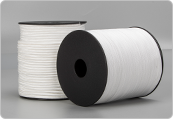
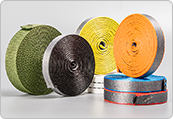
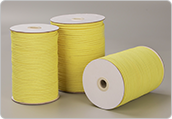
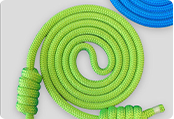
These days, global buyers are really paying more attention to the quality of Elastic Cord, its traceability, and whether the delivery is reliable. It’s no longer just about finding the cheapest option. According to Grand View Research, the market for technical textiles is expected to keep growing through 2030, mainly fueled by performance materials and products built to last. This shift is influencing everything from clothing and outdoor gear to medical supports, packaging, and industrial parts.
Meanwhile, research from Smithers shows there's a rising demand for lightweight, tough, and application-specific materials. Elastic Cord definitely fits that trend, but it’s important to be careful when checking supplier claims. Even if two cords look the same in a catalog, their latex composition, braid density, recovery ability, and coating can vary quite a bit. Dr. Subhash K. Batra, a textile materials expert, reminds us that “Elastic performance is a system, not just a single number.” So, buyers really should test things like how much the cord extends, how quickly it snaps back, its resistance to abrasion, and how it ages over time before giving the green light for mass production.
This guide reviews ten Elastic Cord suppliers around the world. It covers key factors like how much experience they have in manufacturing, their ability to customize products, testing facilities, certifications, minimum order sizes, export readiness, and how well they communicate. Keep in mind, supplier info can change pretty quickly, and some data out there isn’t always complete—that’s just part of the game. Independent testing firms like Intertek and SGS can help verify material quality and performance, but of course, this all depends on having clear specifications to work from. And remember, the biggest supplier isn’t always the best one; what really matters is consistent product quality, accurate documentation, stable lead times, and honesty—especially if a sample doesn’t meet expectations.

Elastic Cord Basics: Types, Materials, Diameters, and Core Structures
Elastic cord usually combines an elastic core with a protective textile cover. Common cores include natural rubber, synthetic rubber, and latex-free elastomer. Polyester covers resist moisture and abrasion, while nylon offers softer handling and higher flexibility. Braided covers create a firm, round profile. Knitted covers feel smoother and stretch more easily. Bare elastic cord remains lightweight, but it can age faster under sunlight.
Diameter affects stretch, grip, and breaking strength. Small cords around 1–3 millimeters suit masks, drawstrings, and light closures. Sizes from 4–8 millimeters are more suitable for outdoor gear, luggage, and adjustable straps. These ranges are practical, not universal.
A thicker cord may still perform poorly if its core is weak. Core structures also matter. Solid cores provide consistent recovery, while multi-strand cores bend more naturally. Too many strands can create uneven tension.
Material selection should include recovery testing, not only visual inspection. ASTM D6775 offers a useful framework for testing textile cord strength, while ISO 2062 supports yarn tensile evaluation. Textile Exchange’s Materials Market Report 2024 recorded 124 million tonnes of global fiber production in 2023. It also reported recycled polyester at roughly 12% of polyester output. That figure supports wider recycled-material sourcing, but recycled fiber alone does not prove durable elastic performance. In sampling work, I would check stretch percentage, recovery after repeated cycles, sheath slippage, and diameter changes after washing. One overlooked issue is odor. It can signal unsuitable rubber additives or poor storage, though testing should confirm the cause.
Global Demand Signals: Textile Cord Market CAGR and End-Use Data
Top 10 Elastic Cord Suppliers for Global Buyers
Global Demand Signals: Textile Cord Market CAGR and End-Use Data
Global demand for elastic textile cord is expanding steadily across apparel, footwear, luggage, home textiles, and outdoor equipment. Current industry forecasts commonly place the market CAGR near 4% to 6% through 2030. Exact figures vary by region, material scope, and currency assumptions. Buyers should treat them as directional, not absolute.
Apparel and footwear remain major end-use segments, driven by adjustable waistbands, drawcord systems, and flexible closures. Outdoor products need stronger cords with reliable recovery after repeated stretching. Luggage and protective equipment often require abrasion resistance more than softness. This difference affects supplier selection. A cord that performs well on a garment may fail inside a loaded backpack.
Regional demand also shows practical signals. Asia continues to support large-volume production, while Europe and North America place stronger emphasis on traceability, testing, and consistent specifications. Suppliers serving global buyers should provide diameter tolerance, elongation data, recovery results, and batch records. Samples matter.
Testing reveals the truth.
In procurement work, cost-per-meter can mislead. A cheaper cord may create higher waste if tension varies between lots. Moisture, heat, washing, and storage conditions can also change performance. Some forecasts may overstate growth because they combine textile cord with unrelated narrow fabrics. Buyers should question that method before ranking suppliers. A careful shortlist needs both market evidence and hands-on testing.
Supplier Screening: ISO 2062 Strength Tests and ASTM D2256 Elongation
Top 10 Elastic Cord Suppliers for Global Buyers
Supplier Screening: ISO 2062 Strength Tests and ASTM D2256 Elongation
Reliable elastic cord suppliers should provide test data, not only attractive samples. ISO 2062 measures yarn breaking force and elongation under controlled conditions. ASTM D2256 evaluates tensile properties using a single-strand method. These standards help buyers compare materials with greater confidence.
Ask for the test date, batch number, gauge length, pretension, and pulling speed. Check whether the report covers the finished cord or only its internal yarn. That difference matters. A polyester-covered elastic cord may behave differently from its core material. During evaluation, inspect the cord after repeated stretching. Look for uneven recovery, surface fuzz, and permanent length change.
Small details matter.
A competent supplier should explain conditioning procedures, equipment calibration, and sampling quantities. Request raw data when possible. Average values can hide weak readings. In our screening work, five specimens sometimes looked consistent, while one failed near the knot or clamp. That result needs investigation, not immediate rejection. Clamping pressure, slippage, and cord construction can affect the outcome.
Do not treat ISO 2062 or ASTM D2256 as automatic proof of finished-product performance. Confirm the laboratory’s method adaptation for elastic cord. Compare breaking force, elongation, recovery, and fatigue results under your actual use conditions. A clear chain from sample to report shows practical experience and stronger quality control. Supplier records should also identify production lots and test personnel. Some documentation remains incomplete. That is a warning, but also an opportunity to ask better questions.
Top 10 Elastic Cord Suppliers for Global Buyers — Supplier Screening: ISO 2062 Strength Tests and ASTM D2256 Elongation
| Screening ID |
Supplier Region |
Elastic Cord Category |
Common Diameter Range |
ISO 2062 Strength-Test Check |
ASTM D2256 Elongation Check |
Required Evidence |
Procurement Status |
| Supplier 01 |
East Asia |
Braided polyester-covered elastic cord |
2–6 mm |
Test single-end breaking force on conditioned yarn samples; report force in cN or N, test speed, gauge length, and specimen count. |
Report breaking force, elongation at break, gauge length, and crosshead speed for the finished cord or specified yarn component. |
Recent laboratory report with lot number and test date. |
Conditional |
| Supplier 02 |
South Asia |
Round elastic shock cord with polyester sheath |
3–8 mm |
Verify whether the submitted report applies to the same diameter, core construction, and production lot ordered by the buyer. |
Compare elongation-at-break results against the buyer’s product specification; ASTM D2256 does not establish one universal pass/fail value. |
Sample-to-lot traceability and signed test conditions. |
Evidence Pending |
| Supplier 03 |
Western Europe |
High-recovery apparel elastic cord |
1.5–5 mm |
Require ISO 2062 test records for each yarn type used in the cord; do not substitute fabric tensile data for yarn strength data. |
Request repeatability data and the complete stress–strain curve where elongation consistency is critical. |
Laboratory accreditation scope and method revision. |
Conditional |
| Supplier 04 |
North America |
Outdoor equipment bungee cord |
4–10 mm |
Use a defined sampling plan and test both cover yarn and finished cord when the purchase specification requires finished-product strength. |
Record elongation at break and permanent extension after the buyer-defined loading cycle; ASTM D2256 alone is not a recovery test. |
Finished-product technical data sheet and retained samples. |
Evidence Pending |
| Supplier 05 |
Southeast Asia |
Latex-core braided elastic cord |
2–7 mm |
Confirm specimen conditioning, pretension, gauge length, and break location before comparing reported strength between lots. |
Separate yarn elongation results from whole-cord elongation results because construction can materially affect finished-cord behavior. |
COA, batch identification, and independent verification option. |
Conditional |
| Supplier 06 |
Eastern Europe |
Flat woven elastic cord |
6–20 mm width |
ISO 2062 is primarily a yarn-strength method; require a separate finished-cord or narrow-fabric tensile method when applicable. |
Use ASTM D2256 only for relevant yarn components and document the specimen construction tested. |
Correct method selection confirmed by the technical department. |
Method Review |
| Supplier 07 |
Latin America |
Drawstring elastic cord for bags and accessories |
2–5 mm |
Check the minimum breaking-force requirement defined in the purchase specification; the standard itself does not define a universal minimum. |
Specify the acceptable elongation range at break and test speed before supplier comparison. |
Pre-shipment inspection plan and batch COA. |
Conditional |
| Supplier 08 |
East Asia |
Reflective elastic cord for safety products |
3–6 mm |
Test the structural yarn separately from reflective or coated components where coatings may influence the result. |
Report the test atmosphere, specimen conditioning, and whether elongation is measured on yarn, core, or finished cord. |
Material composition declaration and laboratory report. |
Evidence Pending |
| Supplier 09 |
South Asia |
Medical and hygiene-product elastic cord |
1–4 mm |
Require tighter lot control and documented specimen conditioning because small-diameter cords can show greater test variation. |
Evaluate elongation together with recovery, aging, and skin-contact requirements; ASTM D2256 does not cover all these properties. |
Lot-specific results, restricted-substance records, and change-control procedure. |
Conditional |
| Supplier 10 |
Middle East and North Africa |
General-purpose braided elastic cord |
2–8 mm |
Accept only reports that identify the tested material, construction, specimen count, force units, and failure mode. |
Require side-by-side comparison with an approved reference sample before production approval. |
Pre-production sample, third-party test option, and corrective-action process. |
Pre-Qualification |
Screening note: ISO 2062 and ASTM D2256 describe test procedures and reporting conditions; they do not provide a single universal strength or elongation acceptance limit for every elastic-cord construction. Buyers should define product-specific limits, conditioning requirements, sampling plans, and finished-cord test methods in the purchase specification.
Top 10 Elastic Cord Suppliers Compared by Capacity, MOQ, and Lead Time
Top 10 Elastic Cord Suppliers for Global Buyers
The top ten elastic cord suppliers differ sharply in production capacity, minimum order quantity, and delivery speed. Large factories commonly support container-scale programs, with monthly output measured in hundreds of thousands of meters. Mid-sized producers often offer more flexible scheduling. Small technical workshops may accept trial orders below 500 meters, but their capacity can tighten during seasonal demand.
Capacity needs evidence.
Ask for monthly output, machine count, inspection records, and recent utilization. The International Textile Manufacturers Federation’s 2024 survey reported continued pressure from weak orders and uncertain investment, so published capacity may not equal available capacity. That comparison is imperfect. Still, it reveals whether a supplier can protect your launch schedule.
MOQ separates the ten suppliers more clearly.
Standard polyester-covered cord may start near 1,000 meters, while custom colors, printed surfaces, or special rubber cores can require 3,000 to 10,000 meters. Lead times usually range from 15 to 45 days after approval. Custom tooling may add two weeks. The World Bank’s Logistics Performance Index 2023 also shows meaningful differences in customs and shipment reliability across manufacturing countries. Build buffer time. Small orders behave differently. A low MOQ may hide higher unit costs, slower sampling, or limited color matching. Grand View Research’s textile market analysis indicates continued demand for performance and technical textiles, which can lengthen queues for specialized materials. Buyers should compare confirmed weekly output, not attractive catalog claims. Mistakes happen here. A supplier with the shortest quoted lead time may not be the safest choice.
Compliance Review: REACH, OEKO-TEX, RoHS, and ISO 9001 Certifications
For global buyers, elastic cord compliance should be checked before price and delivery time. Supplier certificates need product-level evidence, not only scanned logos. REACH documentation should identify restricted substances, test dates, and material composition. The Candidate List changes regularly, so an old declaration may be insufficient. RoHS matters when cords are supplied with electronic devices or assemblies. Its scope restricts ten substances, including lead, mercury, and certain phthalates.
OEKO-TEX testing can help verify harmful-substance controls in dyed, coated, or skin-contact components. Ask for the certificate number and confirm its validity through the official database. ISO 9001 supports process consistency, but it does not prove chemical safety. The ISO Survey 2023 reported 1,265,216 valid ISO 9001 certificates worldwide. That scale shows broad adoption, not automatic product quality. A factory can still ship inconsistent batches.
Practical audits should compare certificates with purchase specifications, batch records, and laboratory reports. The European Commission’s Safety Gate 2023 report recorded 3,412 alerts for dangerous non-food products, highlighting the value of traceable controls. Elastic cords deserve close inspection at the cut end, coating surface, and metal fitting. Request migration or restricted-substance testing when exposure is foreseeable. Sampling only one color may be a weak point. Suppliers should explain test laboratories, sample dates, and corrective actions. Some documentation will look complete but remain difficult to verify. That is where careful questioning matters.
Cost Analysis: Unit Prices, Shipping Metrics, and Total Landed Cost
When comparing the top 10 elastic cord suppliers, unit price is only the opening figure. A standard polyester cord may cost $0.08 to $0.22 per meter, depending on diameter, latex content, braid density, and order volume. Request the same specification from every supplier. Otherwise, a cheaper quote may simply describe a weaker cord.
Shipping can change the decision quickly. Ask for carton dimensions, gross weight, cartons per pallet, and the shipment’s departure port. For example, 100,000 meters may occupy 18 cartons and weigh nearly 520 kilograms. Air freight offers speed but can exceed the product value. Ocean freight lowers the transport rate, yet port handling and customs delays require attention. Delivery terms also matter. A factory price does not include every charge.
Calculate total landed cost per meter, not only the invoice price. Add production cost, tooling, packaging, inland transport, freight, insurance, duties, broker fees, and destination handling. A supplier quoting $0.10 may reach $0.145 after logistics. Another quoting $0.12 may land at $0.138 through better packing and route planning. I have seen buyers overlook pallet fees. That mistake was avoidable. Still, freight estimates remain imperfect because fuel surcharges and exchange rates move. Use recent shipping data, confirm it in writing, and request a pre-production sample. Performance testing should cover stretch recovery, breaking strength, colorfastness, and dimensional consistency. A low landed cost means little if the cord fails during assembly.
Buyer Checklist: Sampling, Quality Control, Contracts, and Risk Management
For global buyers, an elastic cord sample is only the starting point. Measure diameter, stretch recovery, knot security, sheath slippage, and odor after 24 hours. Record results by lot, not by supplier promise. Ask for test pieces from at least three production batches. One attractive sample can hide uneven latex tension. That weakness is easy to miss. The McKinsey Global Institute reports that severe supply interruptions lasting a month or longer occur about every 3.7 years.
Quality control should combine incoming inspection and independent testing. Define tolerance bands, breaking force, elongation, colorfastness, and aging conditions before ordering. Request calibration records, material declarations, and corrective-action reports. A simple photo is not evidence. Retain sealed samples, inspection dates, batch codes, and test results for every shipment. ISO-based procedures help, but paperwork cannot replace physical checks. Test cords after heat, moisture, and repeated cycling. Real use is less polite than the laboratory.
Contracts should specify approved materials, change-notification periods, replacement duties, inspection rights, packaging, payment milestones, and delivery remedies. The World Bank’s 2023 Logistics Performance Index places average international shipment time at about 44 days, so buffer stock matters. UNCTAD’s Review of Maritime Transport notes that over 80% of global merchandise trade by volume moves by sea. Use dual sourcing where practical, but do not assume upstream risks are separate. My checklist remains imperfect: forecasts change, and laboratory tests rarely mirror every customer’s hands.
5mm Bungee Cord Elastic Shock Cord: Flexible Solutions for Secure Everyday Applications
A 5mm bungee cord, also known as an elastic shock cord, offers a practical balance of flexibility, strength, and compact size for everyday securing tasks. Its stretchable construction helps absorb movement and vibration while keeping items firmly in place. The cord can be used to organize cables, hold lightweight covers, secure outdoor equipment, bundle tools, or keep storage items neatly arranged. Its narrow profile makes it easy to thread through loops, hooks, and small openings without adding unnecessary bulk.
Designed for convenience, this elastic cord is simple to cut to the desired length and can be paired with suitable hooks, toggles, or cord ends for different fastening needs. It works well in garages, workshops, travel bags, camping setups, and household storage areas where quick adjustments are useful. The shock-absorbing feature allows the cord to adapt to changing tension, helping reduce sudden pulls and keeping secured items stable during ordinary handling. With proper selection of attachment hardware and regular inspection for wear, 5mm bungee cord provides a flexible solution for organizing and securing everyday belongings.
FAQS
Forecasts commonly indicate a 4% to 6% CAGR through 2030. These figures are directional, not promises. Regional scope can change the result.
Apparel and footwear are major users. Typical applications include waistbands, drawcords, and flexible closures. Luggage, home textiles, and outdoor equipment also create steady demand.
A soft garment cord may fail inside a loaded backpack. Outdoor products need strong recovery after repeated stretching. Luggage often requires abrasion resistance over softness.
Request diameter tolerance, elongation, recovery results, batch numbers, and production records. Ask for the test date and specimen details. Samples matter.
ISO 2062 measures yarn breaking force and elongation. ASTM D2256 evaluates single-strand tensile properties. These tests improve comparison, but they do not prove every finished-product result.
Check the batch number, gauge length, pretension, pulling speed, and test date. Confirm whether the report covers finished cord or only internal yarn. That difference matters.
A cheaper cord may create more waste when tension varies between lots. Moisture, heat, washing, and storage can change performance. The lowest price may not stay lowest.
Stretch each sample repeatedly and measure recovery afterward. Look for uneven return, surface fuzz, and permanent length change. One sample can mislead.
Clamping pressure, slippage, knots, and cord construction can affect readings. Five specimens may look consistent while one fails near a clamp. That result needs investigation.
Combine market evidence with hands-on testing and traceable records. Compare breaking force, elongation, recovery, and fatigue under actual use conditions. Some documentation may remain incomplete. That is a warning.
Conclusion
This guide provides global buyers with a practical framework for evaluating Elastic Cord suppliers and selecting products suited to different applications. It explains essential product characteristics, including cord types, material options, diameter ranges, and core structures, while also outlining key textile market demand signals and end-use trends. Buyers will learn how to compare suppliers according to production capacity, minimum order quantities, lead times, and quality consistency.
The article also emphasizes reliable supplier screening through strength and elongation testing, along with verification of certifications such as REACH, OEKO-TEX, RoHS, and ISO 9001. A cost analysis model covers unit pricing, shipping efficiency, and total landed cost rather than focusing only on quoted prices. Finally, the buyer checklist addresses sample approval, incoming quality control, contract terms, documentation, and risk management, helping purchasers make informed decisions and build dependable long-term supply relationships.