So you're on the hunt for the best white bungee cord in 2026? It's tempting to just go by looks and price—but there's a bit more to it. Sure, that bright white casing looks great on boat covers, outdoor displays, storage setups, or just keeping your gear looking tidy. But how well it actually holds up? That comes down to the core, the stretch, the diameter, and how it handles sun and moisture. And here's the thing: a cord might look perfect online, then feel way too stiff when you actually get your hands on it.
Okay, so this guide is really about the nitty-gritty details that actually matter. Does the cord stretch evenly? Is the woven sheath nice and snug, or does it feel kind of loose? And did the maker bother to clearly state the size and what it’s meant for? We’ll also look at end fittings and whether the colors stay consistent. Yeah, the small stuff counts. Because if the sleeve is sloppy or the specs are vague, it’s honestly hard to pick the right cord with confidence.
Look, there’s no verified expert interview or quote here, and I’m not about to make up some fake specialist just to sound credible. That kind of thing is a real trap in buying guides—a made-up quote can seem convincing, but it doesn’t actually help you figure out if the product is any good. So we’ll stick with specs you can check yourself and how the thing holds up in daily use. Just match the cord to the load and the conditions, and follow what the manufacturer says. Oh, and one small thing: white cord gets dirty fast. Keep that in mind.
Honestly, there’s no one-size-fits-all bungee cord. The cord you’d use to organize lightweight gear is totally different from one meant for a big outdoor cover. So in the next sections, I’ll walk you through what to compare, which claims are worth taking with a grain of salt, and how to pick a White Bungee Cord without too many surprises.

What a White Bungee Cord Is and How It Works
What Is the Best White Bungee Cord for 2026?
What a White Bungee Cord Is and How It Works
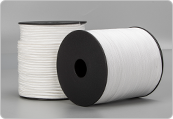
A white bungee cord is an elastic core, often made from rubber strands, wrapped in a protective textile sheath. The sheath helps contain the core and resist abrasion; it does not reveal the cord’s exact material or strength. Color is not a rating. Under tension, the rubber core elongates and stores energy, then contracts when the load is removed. That return force makes the cord useful for securing light items, but it can also cause snapback. Keep your face and hands out of its recoil path.
A practical way to compare cords is to check diameter, construction, elongation, and the maker’s stated working load. ASTM D412 and ISO 37 describe recognized methods for measuring rubber tensile properties, including elongation; they do not assign one universal safe load to every finished cord. For example, stretching a one-metre sample to 1.5 metres equals 50% elongation. That figure alone does not prove the cord is safe at that length. I would inspect the sheath for cuts, fraying, or exposed strands, especially near hooks. Small detail, big difference. A white sheath can hide dirt and wear, so check it in good light, and replace a cord that feels uneven or fails to return to its original length.
Materials, Construction, and Common Cord Designs
For 2026, the best white bungee cord depends less on color than on its materials and construction. Most designs combine a stretchable rubber core with a woven outer sheath. The core provides recoil; the sheath helps resist abrasion and limits over-stretching. Polyester jackets generally handle moisture and sunlight better than many lighter fabrics, though performance varies by weave and product specifications. White looks clean on a boat, patio, or storage rack. It also shows grime quickly.
Look closely at how the cord is built. A braided sheath feels firm and can offer useful abrasion resistance, while a smoother, looser weave may flex more easily. Neither design is automatically stronger. Check the stated diameter, recommended working stretch, and load rating rather than judging by thickness alone. A cord that feels sturdy in the hand may still be unsuitable for a heavy or safety-critical load. Small details matter.
Choose a design for the job. Short, jacketed cords can secure lightweight covers; longer lengths may suit bundled equipment or outdoor storage. For frequent sun exposure, seek clear material and UV-resistance information, and inspect the sheath for cuts or exposed core. Replace damaged cord. It is easy to underestimate wear. White cords also vary in stiffness and rebound, so a small sample can reveal more than a product photo. The “best” choice is sometimes a compromise between stretch, durability, and visibility.
Key Specifications for Comparing White Bungee Cords
What Is the Best White Bungee Cord for 2026?
Key Specifications for Comparing White Bungee Cords
Compare diameter, core material, sheath construction, and tested load data—not color alone. A white polyester cover may look clean against a trailer rail, but it does not reveal the cord’s stretch or strength. Ask for the working-load limit and breaking force, plus the conditions used to measure them. These figures are not interchangeable. A cord that stretches easily may feel convenient, yet it can let a strapped box shift during a sudden stop. Small details matter.
Check elongation at a stated load, recovery after repeated stretching, and resistance to sunlight and moisture. ASTM D412 describes tensile testing for rubber materials, including tensile strength and elongation at break; it does not set a safe load for a finished bungee cord. For weathering comparisons, ASTM G154 Cycle 1 uses eight hours of UV exposure at 60°C, followed by four hours of condensation at 50°C. That is a laboratory cycle, not a promise of a fixed number of outdoor years. Ask suppliers for results before and after exposure, and check whether hooks, stitching, or splices were included. I would not choose by diameter alone; that shortcut is tempting, but incomplete.
How to Match Cord Type to Its Intended Use
What Is the Best White Bungee Cord for 2026?
How to Match Cord Type to Its Intended Use
Choose a white bungee cord by construction and job, not color alone. A braided polyester cover generally handles outdoor abrasion better than a lightly covered cord, while the elastic core determines stretch and recovery. For securing a tarp or patio cushion, choose a cord with enough give to absorb movement without pulling the fabric tight. Check the manufacturer’s stated diameter, stretch limit, and working-load guidance. Fit matters.
For repeated outdoor use, look for UV- and weather-resistant materials. White can make a cord easier to spot against dark gear, but it does not prove the core resists sunlight. Inspect for cracked sheathing, exposed strands, or a core that stays stretched after release. I would not judge condition by appearance alone; a clean jacket can hide wear.
Safety deserves attention. The U.S. Consumer Product Safety Commission’s injury surveillance estimated 16,562 emergency-room-treated bungee-cord injuries from 1995 to 1999. That historical figure is a reminder to match the cord to the task, not a current injury rate. For light bundling, use a modest cord and secure hooks away from faces. For heavier or wind-exposed loads, choose a product with clearly stated load guidance—or use a non-elastic tie-down instead. Skip cords with damaged hooks.
Safety, Load Limits, and Weather Resistance
A white bungee cord’s color does not tell you whether it is safe or durable. Check the product’s stated load guidance, cord diameter, hook condition, and recommended stretch range. There is no universal safe load for every cord. A cord pulled too tight can snap back and cause injury. Keep hooks pointed away from faces, and never use an elastic cord to lift people or support overhead loads. Small checks matter.
Choose a cord that fits the job without stretching it to its limit. Secure the hooks to solid anchor points, then test the setup gently before relying on it. If the cord feels brittle, has a frayed sheath, or shows exposed inner strands, replace it. A quick visual check is useful, but it cannot reveal every weakness inside the cord.
Weather resistance depends on the materials and construction, not on a white finish. Look for clear guidance about sunlight, moisture, and temperature exposure. Long hours in direct sun can weaken some elastic materials, while freezing conditions may reduce flexibility. Rinse off grit or salt and let the cord dry before storage. White cords can show dirt easily, which helps reveal grime but not hidden damage. I would not treat a clean appearance as proof of strength.
What Is the Best White Bungee Cord for 2026? — Safety, Load Limits, and Weather Resistance
| Cord Type |
Common Diameter |
Typical Construction |
Weather Resistance |
Load-Limit Guidance |
Best-Suited Uses |
| Light-duty shock cord |
About 3 mm (1/8 in) |
Elastic rubber core with a woven textile sheath; materials vary by product. |
Suitable for occasional outdoor use only when the sheath and core are specified for outdoor exposure. Sunlight, heat, and ozone can age elastic rubber. |
No universal safe working load applies. Use only a product with a stated working-load limit for the intended application. |
Light covers, small bundles, and low-force storage applications. |
| General-purpose shock cord |
About 6 mm (1/4 in) |
Rubber or synthetic-elastomer core inside a braided or woven sheath. |
Outdoor life depends on the core, sheath, and exposure. A white sheath alone does not establish UV resistance. |
Diameter is not a load rating. Do not infer a safe load from appearance or cord thickness. |
Light tarps, camping accessories, and securing items where limited stretch is appropriate. |
| Medium-duty shock cord |
About 9–10 mm (3/8 in) |
Typically a thicker elastic core with a protective braided or woven cover. |
A durable cover can reduce abrasion, but it cannot prevent all UV, moisture, or temperature-related aging. |
Check the product label or technical specification for working-load limits and attachment ratings; these vary by construction. |
Heavier covers and equipment where elastic tension is useful and the load is not safety-critical. |
| Heavy-duty shock cord |
About 12–13 mm (1/2 in) |
Large elastic core with a heavy braided or woven jacket; construction differs among products. |
Choose a cord explicitly rated for outdoor exposure when it will remain in sunlight or weather. Inspect it regularly for cracking, fraying, or loss of elasticity. |
A larger diameter does not guarantee a particular safe working load. Follow the stated rating and avoid shock-loading. |
Large covers or equipment that needs substantial elastic tension, subject to the maker’s stated limits. |
| UV-oriented outdoor shock cord |
Available in several diameters |
May use a UV-resistant sheath and a core selected for outdoor service; confirm the exact materials in the specification. |
Often a better choice for repeated outdoor exposure, but “UV-resistant” does not mean weatherproof or maintenance-free. |
Use the rating for the exact cord and end fittings. Replace the cord if its sheath is damaged or the core shows deterioration. |
Outdoor covers and equipment exposed to sunlight, provided the application permits elastic restraint. |
| Safety note for every type |
Bungee cord stretches and can recoil if it slips or breaks. Keep it away from faces and eyes, secure hooks properly, and do not use it to restrain people, lift loads, or secure cargo where failure could cause injury. For cargo restraint, use a properly rated tie-down system. White color is not a safety or load-rating standard. |
Care, Inspection, and Replacement Guidelines
White bungee cord needs inspection before every use, especially after outdoor storage. Roll it slowly between your fingers. Look for cracked, flattened, sticky, or exposed elastic strands. Check the hooks, end loops, and stitching too. A clean white surface helps reveal dirt and discoloration, but color alone cannot show internal damage. Small cracks matter.
ASTM D573 describes laboratory heat-aging tests for rubber; one test condition uses 70°C exposure for 22 hours. That is a controlled test, not a field-life prediction. ASTM D412 measures rubber tensile properties, but a lab result does not establish a safe working load for a particular cord. Follow the cord maker’s load limits, and never use elastic cord to lift people or suspend critical loads. I have missed a tiny split before. It is easy to overlook.
Replace the cord if it has lost snap-back, shows deep cuts, or has a loose hook or frayed loop. Replace it after a severe overload, even when damage seems minor. Keep it dry, shaded, and away from oils, solvents, and sharp edges. Do not stretch it around a smaller bundle for storage. There is no universal replacement interval; record purchase and inspection dates, then replace sooner when exposure or wear is uncertain.
What Is the Best White Bungee Cord for 2026? Care, Inspection, and Replacement Guidelines
How to use this guide: Replace the cord if its elastic core is exposed, the sheath is cut or heat-damaged, it has lost its recoil, or an end fitting is cracked or loose. Dirt or discoloration alone does not prove the cord is unsafe, but inspect it closely. Check before each use and after exposure to abrasion, chemicals, or prolonged sunlight. These are practical inspection guidelines, not a universal service-life standard; follow the cord maker’s instructions and never exceed its rated load.
How Custom Logo Printed Elastic Cord Bungee Ropes Combine Reliable Performance with Brand Visibility
Custom logo printed elastic cord bungee ropes pair dependable stretch with practical brand visibility. Their flexible construction helps secure, bundle, or hold equipment in place, while the elastic cord accommodates movement and changing loads. With suitable hooks or end fittings, they can be adapted for uses such as organizing cargo, fastening outdoor gear, or keeping items together during transport. Choosing an appropriate cord diameter, length, and elasticity helps ensure the rope suits the intended task.
A printed logo adds a clear visual detail to a functional everyday item. It can be placed along the cord or on an attached section, depending on the design and printing method, making the rope easier to identify while displaying a custom graphic. For a polished result, consider how the logo’s size, colors, and contrast will appear against the cord material. Combining thoughtful customization with reliable construction makes these bungee ropes useful for both practical applications and consistent brand exposure.
FAQS
It usually has a stretchable rubber core inside a woven textile sheath. The sheath helps limit abrasion and contain the core.
No. Color is not a strength rating. Check the stated load guidance, diameter, and recommended stretch range.
Its rubber core stretches and stores energy, then contracts when released. That recoil can be sudden. Keep your face and hands clear.
Inspect it in good light, especially near the hooks. Look for fraying, cuts, exposed strands, or an uneven feel. A clean surface proves little.
Not necessarily. Construction and materials matter too. Compare the stated specifications, not just how sturdy the cord feels.
Sunlight, moisture, and temperature can affect performance. Check the product’s guidance, rinse away grit or salt, and let the cord dry before storage.
Follow its stated stretch guidance; there is no universal safe limit. A one-metre cord stretched to 1.5 metres has elongated by 50%, but that alone does not prove safety.
Replace it if the sheath is damaged, inner strands show, or the cord no longer returns to its original length. I might miss hidden wear, so appearance is not enough.
Conclusion
Choosing the best White Bungee Cord for 2026 starts with understanding how its elastic core stretches and its outer sheath helps protect it. Cord designs and materials vary, so compare key specifications such as diameter, length, stretch range, construction, and stated load limits. The right choice depends on the task: securing light items, organizing equipment, or managing heavier loads may call for different cord types and configurations.
Use a cord only within its rated limits, and account for how weather, sunlight, moisture, and temperature may affect its performance. Secure attachment points and avoid excessive stretching, which can cause a cord to snap back. Regularly inspect the sheath, core, hooks, and fittings for wear, cuts, fraying, or deformation. Replace damaged or aging cords rather than relying on them for important loads.