Picking the right boat dock lines is more important than you might think. It can really save you from sudden tugs, loud squeaks, or even costly damages when you're docked. A good, reliable line should handle shocks without overstretching, and it needs to hold up against saltwater, sunshine, abrasions, and the constant wet-and-dry cycle. Nylon tends to be a popular pick because it’s stretchy enough to absorb some shock but also strong. But honestly, just choosing the material isn’t enough—you still need a line that’s actually secure for mooring.
In this guide, we’ll look at seven different dock lines suitable for various boats, different dock setups, and all kinds of weather. We dive into details like diameter, breaking strength, how the line is built, eye splices, how well it resists chafing, and how easy it is to handle. Trust me, little things matter. For instance, a stiff line can be a pain to tie around a cleat, while a soft one might absorb movement better but will wear out faster if it rubs against rough hardware. The right length is also key—too short, and it’ll pull sharply during wakes or when tides rise; too long, and it might slack off, knot up, or create tripping hazards.
The truth is, docks aren’t perfect. Winds shift suddenly, tides go up, hardware gets corroded—stuff you can’t always predict. Even the best-rated lines can fail if they’re rubbing against sharp edges or aren’t maintained. Regular checks are a must—pay special attention to splices and parts under heavy load. There’s no one-size-fits-all answer, and manufacturers’ ratings can vary depending on how they test. So, it’s best not to rely blindly on numbers. That said, in this list, we focus on lines that are built well, handle easily, and keep you secure day-to-day—so you can relax knowing your boat’s in good hands.

Define Dock-Line Requirements Using Boat Length, Cleats, Wind, and Current Data
The best dock line is not chosen by boat length alone. Start with displacement, cleat spacing, wind exposure, and current speed. A 25-foot boat in a protected canal needs different protection from the same boat beside an open inlet. ABYC H-40, Anchoring, Mooring, and Lifting Hardware, stresses properly matched hardware and load paths. The line must fit the cleat without sharp turns or crushing pressure.
Use the boat’s length as a starting point, not a final answer. Longer boats usually create greater movement and higher line loads. Check every cleat, fairlead, and chock for cracks or loose fasteners. The U.S. Coast Guard’s 2023 Recreational Boating Statistics report recorded 3,844 boating incidents, reminding owners that small equipment decisions can affect wider safety. A dock line should also have enough elasticity to absorb repeated surges.
Wind and current deserve direct measurement. NOAA tide and current predictions can reveal changing water direction and speed near the dock. A line arrangement that works at slack water may strain badly during a spring tide. Use longer lines for controlled stretch, and add spring lines to limit forward and backward travel. Chafe protection matters where the line touches a ring or chock.
Watch the dock after installation. It may expose flaws.
I would reassess the setup after strong wind, unusual tide, or a change in loading. There is no perfect formula. My cautious preference is slightly more capacity, provided the cleats and dock structure can safely carry it.
7 Dock-Line Size Recommendations for Secure Mooring
Baseline dock-line diameters are estimated from the common sizing rule of
approximately 1/8 inch of line diameter for every 9 feet of boat length,
rounded up to the next standard size.
These are starting-point values for normal berths: 3/8 in (10 mm), 1/2 in (12.7 mm),
5/8 in (16 mm), 3/4 in (19 mm), and 1 in (25 mm). In strong wind, strong current,
surge, or an exposed berth, increase the line size by at least one step when the
cleats, chocks, and attachment points can safely accommodate it. Use bow, stern,
and spring lines, and treat the weakest fitting as the limiting component.
Compare 7/16-, 1/2-, 5/8-, and 3/4-Inch Lines by Rated Breaking Load
Choosing the best boat dock line depends on rated breaking load, stretch, chafe resistance, and your boat’s weight. Marine nylon remains a practical choice because it absorbs shock during wakes and sudden movement.
A 7/16-inch line may suit lighter boats in protected slips, with an approximate breaking load of 3,500 to 5,500 pounds. A 1/2-inch line often falls near 5,000 to 7,500 pounds. The 5/8-inch size commonly reaches 8,000 to 12,000 pounds, while 3/4-inch lines may exceed 12,000 pounds. These figures are general guides, not guarantees. Construction, braid style, and splice quality can change the rating significantly. Always check the line’s published breaking-load specification.
Tips: Select lines with working-load limits, not breaking loads alone. Use larger diameters where surge, current, or exposed pilings create extra strain. Inspect contact points for flattened fibers, fuzzing, cuts, or salt-stiffened sections. I once chose an oversized line for a small boat; it resisted handling and made quick adjustments awkward. Bigger is not automatically safer. Allow enough stretch for shock absorption, but avoid excessive slack that lets the boat strike the dock. A backup spring line can add useful control during rough weather.
Evaluate Nylon’s 15–30% Elastic Stretch for Shock-Absorbing Mooring
When comparing seven boat dock lines, nylon deserves close attention. Its elastic stretch can reach roughly 15–30% under substantial load, depending on construction, diameter, and force. That movement absorbs sudden shocks when wakes lift the hull. The line tightens, yields, and eases tension across the cleat and piling. That matters in exposed slips.
In practice, correctly sized nylon lines should include eye splices protected by chafe gear. A 20-foot boat may surge repeatedly against a short, rigid line. Nylon gives it breathing room. Never treat 30% as guaranteed. It is an approximate range, not a promise. Working load, moisture, age, and heat can change performance. A line may look sound while internal fibers are tired. Check flattened sections, fuzzing, cuts, and stiff spots after rough-weather outings. Small details matter.
A useful setup combines spring lines with bow and stern lines, allowing controlled movement without excessive slack. Leave enough length for tide changes, but avoid loops that could foul hardware. Underestimating chafe near a rough fairlead is an easy mistake. That error can change an inspection routine. Nylon is forgiving. It is not indestructible. Choose lines by diameter, working load, splice quality, and the dock’s movement pattern. Test the fit before trusting the setup overnight.
Compare Three-Strand, Double-Braid, and HMPE Construction Performance
7 Best Boat Dock Lines for Secure Mooring?
Construction matters more than appearance when a boat stays beside a dock. Three-strand nylon remains popular because its helical fibers absorb shock. Cordage Institute technical data commonly places nylon’s working elongation near 10–15%, depending on load and construction. That stretch helps during wakes, gusts, and sudden tide changes. However, three-strand rope can rotate under load and unravel when poorly spliced. I have seen chafe begin at the eye, not the cleat.
Double-braid nylon offers a smoother surface and better dimensional stability. Its cover protects the load-bearing core from moderate abrasion. Technical comparisons based on ISO 2307 testing often show lower elongation than three-strand rope, commonly around 6–10%. That can improve handling, but it also transfers more shock into cleats and fairleads. The numbers vary with moisture, splice quality, and test speed. Real docks are less predictable.
HMPE construction is extremely light and has very low stretch, often below 1% in published cordage data. Industry fiber reports frequently cite a strength-to-weight ratio roughly seven times higher than steel. Impressive, but not automatically safer. Low elasticity can create sharp peak loads during a wake. Abrasion, heat, and tight bends also deserve attention. ISO 9554 guidance stresses inspection and correct termination. A line may look perfect while its buried splice slowly weakens. That is the uncomfortable part. Choose construction around movement, chafe exposure, and hardware—not breaking strength alone.
7 Best Boat Dock Lines for Secure Mooring? — Compare Three-Strand, Double-Braid, and HMPE Construction Performance
| # |
Dock Line Construction |
Typical Diameter |
Approx. Breaking Strength |
Working Elongation |
Shock Absorption |
Chafe Resistance |
Handling & Splicing |
Best Use |
Overall Rating |
| 1 |
Double-Braid Nylon |
1/2 in (12.7 mm) |
Approx. 6,000–7,000 lbf
(26.7–31.1 kN) |
10–15% |
Excellent |
Very good |
Smooth, flexible, and suitable for professional eye splicing |
Permanent slips, finger piers, and exposed moorings |
★★★★★ |
| 2 |
Three-Strand Nylon |
1/2 in (12.7 mm) |
Approx. 5,000–6,000 lbf
(22.2–26.7 kN) |
15–20% |
Outstanding |
Good |
Easy to inspect, cut, and splice; can twist under repeated loading |
Tidal docks and storm-prone moorings requiring maximum stretch |
★★★★★ |
| 3 |
Double-Braid Polyester |
1/2 in (12.7 mm) |
Approx. 7,000–8,000 lbf
(31.1–35.6 kN) |
3–5% |
Moderate |
Excellent |
Low-stretch, stable, and resistant to sunlight; less forgiving in surge |
Protected marinas, fixed-length dock lines, and chafe-prone fittings |
★★★★☆ |
| 4 |
Three-Strand Polyester |
1/2 in (12.7 mm) |
Approx. 6,000–7,000 lbf
(26.7–31.1 kN) |
3–6% |
Low to moderate |
Very good |
Simple construction and good dimensional stability; can feel firm under load |
Calm-water berths and applications where low stretch is preferred |
★★★★☆ |
| 5 |
HMPE-Core Double Braid with Polyester Cover |
3/8 in (9.5 mm) |
Approx. 8,000–10,000 lbf
(35.6–44.5 kN) |
1–3% |
Low |
Good with proper cover protection |
Very lightweight and strong; requires careful splicing and heat management |
Weight-sensitive boats and high-load, low-stretch mooring systems |
★★★★☆ |
| 6 |
Three-Strand Nylon with Chafe Sleeve |
5/8 in (15.9 mm) |
Approx. 7,500–9,000 lbf
(33.4–40.0 kN) |
15–20% |
Outstanding |
Excellent at protected contact points |
Highly forgiving and easy to splice; bulkier than smaller double-braid lines |
Large boats, rough pilings, and long-term lines exposed to abrasion |
★★★★☆ |
| 7 |
Double-Braid Nylon with Chafe Guard |
5/8 in (15.9 mm) |
Approx. 9,000–11,000 lbf
(40.0–48.9 kN) |
10–15% |
Excellent |
Excellent at eyes, rings, and fairleads |
Comfortable to handle and highly durable; larger diameter increases cost and bulk |
Heavy cruising boats and permanent lines with concentrated chafe |
★★★★☆ |
|
Strength values are representative ranges for new, undamaged marine rope and vary by fiber grade, braid construction, diameter, splice efficiency, and manufacturer testing. Select line diameter and length according to boat displacement, wind and current exposure, cleat size, surge conditions, and local mooring requirements. Nylon generally provides the best energy absorption, while polyester and HMPE constructions offer lower stretch.
|
Measure Chafe Protection Against Abrasion at Cleats, Pilings, and Fairleads
7 Best Boat Dock Lines for Secure Mooring?
Abrasion protection matters more than a rope’s glossy appearance.
At cleats, pilings, and fairleads, repeated movement removes fibers slowly. Chafe is often silent. A line may look sound while its cover becomes fuzzy, flattened, or glazed. ISO 9554:2019 identifies abrasion, heat, cuts, and chemical exposure as key inspection concerns for fiber ropes. That makes protective sleeves essential at every hard contact point.
The best dock lines should fit the boat, tide range, and hardware geometry. A sleeve must cover the full rubbing zone, not just the visible edge of a cleat. On pilings, use flexible protection that cannot slide away during surge. At fairleads, check both sides of the opening.
A 2023 U.S. Coast Guard recreational boating report recorded
4,064 accidents
and
623 deaths.
It does not isolate dock-line failures, but it reinforces a practical point: small equipment weaknesses deserve serious attention.
Inspect lines after storms, strong wakes, and spring tide changes. Look for broken yarns, hard spots, discoloration, and melted fibers. Replace a line when damage reaches its load-bearing core. Do not rely on diameter alone. Larger rope can still fail at one sharp contact point.
I would also question loose covers; they may trap grit and accelerate wear. That detail is easy to miss. A simple hand check, followed by a slow pull against each fitting, often reveals movement before visible damage appears.
Match Line Length to Tidal Range, Freeboard, and a 30–45° Lead Angle
7 Best Boat Dock Lines for Secure Mooring?
Choosing among the seven best boat dock lines starts with geometry, not color or price.
Measure from each onboard cleat to the dock attachment point. Then add enough length for the local tidal range, changing freeboard, and safe adjustment. A line that works at high water may pull hard at low water. My first setup was too short, and the boat rode uncomfortably against the fenders.
Aim for a 30–45° lead angle from the boat cleat to the dock fitting.
This angle helps control forward, backward, and sideways movement. Bow and stern lines should allow vertical movement without becoming slack. Spring lines need extra length for stretch and repositioning. On floating docks, a longer line often handles tide changes better. On fixed docks, measure the lowest expected water level carefully.
Use marine-grade, flexible line with proper chafe protection at every rubbing point. Inspect the fibers near cleats, rings, and fairleads before each trip. A thick line is not automatically safer; oversized rope can resist adjustment and overload hardware. Smaller boats may need lighter lines, while heavy boats require stronger, correctly rated equipment. Nylon reduces shock loads, but it absorbs water and can lose strength over time. That detail is easy to miss. Leave room for knots, splices, and tidal movement, then test the setup while watching the boat rise and fall.
Rank the 7 Best Dock Lines by MBL, Stretch, UV Resistance, and Service Life
7 Best Boat Dock Lines for Secure Mooring
This ranking weighs minimum breaking load (MBL), controlled stretch, UV resistance, and realistic service life. Diameter matters greatly, so compare MBL figures within the same size.
1. Double-braided nylon offers strong MBL and excellent shock absorption. Its stretch protects cleats during wakes, but sunlight slowly weakens it. Expected service life is about three to five years.
2. Three-strand nylon stretches more and costs less. It handles sudden loading well, although it twists and chafes faster. Inspect it frequently.
3. Double-braided polyester provides outstanding UV resistance and a long service life, often five to eight years. Its low stretch gives firm positioning, but it absorbs heavier shock.
4. Three-strand polyester resists sunlight and abrasion effectively. However, it feels less forgiving during strong wake action. It suits calm, protected slips.
5. Nylon lines with integrated chafe protection deserve consideration. The sleeve may extend service life near rough cleats, though it cannot repair internal fiber damage.
6. High-strength, low-stretch fiber lines deliver impressive MBL for their diameter. They resist some environmental damage, but limited stretch can transfer sudden loads to fittings.
7. Polypropylene lines are lightweight and float. Their low price is appealing, yet UV degradation and shorter service life make them a weak long-term choice.
Tips: Check every line after storms, especially around fairleads and piling edges. Replace lines showing glazing, flattened fibers, stiffness, or faded color. Do not select by MBL alone. A dock line needs enough reserve strength, useful stretch, and dependable chafe protection. Personally, I would rather replace a slightly worn line early than trust an impressive rating that ignores real dock conditions.
19mm Flow Rope: Features, Benefits, Applications, and Buying Guide
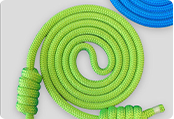
A 19mm flow rope is designed for users who need a balanced combination of flexibility, strength, and handling comfort. Its generous diameter provides a secure grip while helping reduce pressure on the hands during repeated movement. A well-made rope typically features durable synthetic fibers, a smooth surface, and a flexible construction that allows controlled bends without becoming stiff or difficult to manage. Depending on the design, protective end treatments can also help prevent fraying and extend service life.
This size is suitable for climbing practice, rope-based fitness, training drills, obstacle activities, and general gym or home use. It can support pulling, climbing, swinging, and conditioning exercises, making it a practical option for both beginners and experienced users. The thicker profile may also improve visibility and control, especially during fast-paced movements or outdoor sessions. However, users should choose a rope length and strength rating that match the intended activity, body weight, installation method, and available space.
When buying a 19mm flow rope, examine the material, core construction, surface texture, end finishing, and connection hardware. Look for clear information about maximum load, abrasion resistance, weather suitability, and maintenance requirements. Consider whether the rope will be used indoors or outdoors, how frequently it will be handled, and whether its weight is comfortable for the user. Before each session, inspect it for cuts, loose fibers, unusual stretching, or damaged fittings, and replace it if its structural condition becomes uncertain.
FAQS
No. Boat length is only a starting point. Consider displacement, cleat spacing, wind exposure, and current speed. A 25-foot boat in a sheltered canal faces different loads than one beside an inlet. Check cleats, fairleads, and chocks for cracks or loose fasteners.
A 7/16-inch line may break around 3,500–5,500 pounds. A 1/2-inch line often reaches 5,000–7,500 pounds. A 5/8-inch line commonly reaches 8,000–12,000 pounds. A 3/4-inch line may exceed 12,000 pounds. These are general ranges, not guarantees. Construction, braid, and splice quality can change performance.
No. Use the working-load limit as well. Breaking load describes failure, not normal service. Choose additional capacity when wakes, current, or exposed pilings create repeated strain. However, oversized lines can feel stiff and slow during adjustments. Bigger is not automatically safer.
Nylon stretches and absorbs sudden shock. Its elastic stretch may reach roughly 15–30% under substantial load. A wake lifts the hull, and the line yields instead of transferring every jolt to the cleat. This range is approximate. Age, moisture, heat, and loading can reduce performance.
Combine spring lines with bow and stern lines. They limit forward and backward movement. Leave enough length for changing tides, but avoid loose loops. Excess slack may let the boat strike the dock. A backup spring line can provide extra control during rough weather.
Protect every contact point, especially rings, fairleads, chocks, and rough pilings. Inspect for flattened fibers, fuzzing, cuts, and stiff salt-covered sections. Chafe can develop quietly. A line may look acceptable while internal fibers are weakened. Replace questionable sections rather than trusting appearance alone.
Measure changing water direction and speed near the dock. A setup that works during slack water may strain during a stronger tide. Open water also exposes the boat to longer wave movement. Use controlled stretch and suitable spring lines. Watch the dock after installation. It may reveal problems.
Inspect them after strong wind, unusual tides, heavy loading, or rough-weather outings. Check line fit around every cleat. Confirm that fasteners remain tight and hardware shows no cracks. I once preferred an oversized line for a small boat; handling became awkward. I would reassess sooner now.
Conclusion
Choosing the best Boat Dock Lines starts with matching line size and construction to the vessel, cleat layout, wind exposure, current, and expected tidal movement. Common diameters from 7/16 to 3/4 inch offer different rated breaking loads, while nylon remains a practical choice because its 15–30% elastic stretch helps absorb sudden shock from waves and wakes. Three-strand lines are flexible and easy to splice, double-braid lines provide a smoother, stronger profile, and HMPE options prioritize high strength with minimal stretch.
A reliable selection should also account for abrasion at cleats, pilings, and fairleads, along with UV exposure and long-term service life. Line length must allow for tidal range, freeboard, and a controlled 30–45° lead angle without restricting movement. The seven recommended dock lines are ranked by breaking strength, shock absorption, resistance to sunlight, chafe durability, handling comfort, and expected lifespan, helping boat owners build a secure and adaptable mooring system.