

0%

Picking reliable suppliers really matters when you're dealing with ropes that carry people, boats, gear, or priceless cargo. In this guide, we're taking a closer look at the 2026 market for Double Braided Ropes around the globe. We’re focusing on things like how well they’re built, the consistency of their materials, how they perform at splices, testing standards, paperwork, and after-sales support. Trust me, all those details can make or break whether a rope works smoothly or just gives out when you need it most.

So, what exactly is a double braided rope? Well, it’s basically a rope with a braided core wrapped in a braided cover. This combo can give you strength, flexibility, resistance to wear and tear, and a bit of controlled stretch. But here’s the thing—performance really depends on the fiber used, how precisely they braid it, and how properly you end the ends. Just looking at a shiny sample isn’t enough. Buyers should definitely ask for technical specs, batch traceability, inspection reports, and real-world application advice. Different industries—like marine, towing, lifting, rescue, or industrial work—might have their own specific needs, too.

John Baker, a senior rope engineer from Samson Rope Technologies, says it pretty straightforwardly: “A rope is only as reliable as its design, handling, and inspection.” That's a principle that guides us in reviewing suppliers. Good manufacturers should be upfront about their testing methods, recommended working loads, splice techniques, and safe limits. And they should be honest about what their ropes simply can’t do safely—that part often gets overlooked.

When we evaluate companies, we look at their manufacturing capability, experience in exporting, customization options, quality control systems, and how well they communicate. Sure, some suppliers might offer pretty competitive prices but might fall short when it comes to technical support. Others might be fantastic engineers but take a bit longer to deliver. Buyers around the world need to balance both sides of that coin. Honestly, the cheapest quote isn’t always the best choice. The real winner is the supplier who can consistently deliver quality Double Braided Ropes, provide clear documentation, respond quickly to inquiries, and give you peace of mind from the initial order all the way to using the rope in the field.

2026 Top Double Braided Rope Suppliers for Global Buyers

Double Braided Rope: Structure, Materials, and Core Performance Features

2026 Top Double Braided Rope Suppliers for Global Buyers

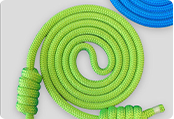
Double braided rope contains a braided cover around a braided core. The core usually carries most of the tensile load. The cover protects it from abrasion, dirt, and repeated handling. Both parts can use polyester, nylon, or high-modulus fibers. Material selection changes stretch, strength, water resistance, and heat response. Nylon absorbs energy well, while polyester offers lower stretch and better dimensional stability.

In practical inspections, rope performance depends on more than fiber labels. A tight, balanced braid helps distribute pressure during loading. Uneven cover tension can create early wear or difficult splices. Diameter consistency also matters for sheaves, winches, and connection hardware. Global buyers should request breaking-load data, elongation figures, abrasion results, and batch traceability. Clear test methods make supplier comparisons more reliable.

The best construction still needs correct handling. Sharp edges, small bend radii, and uncontrolled heat can damage fibers quickly. I have seen ropes with clean surfaces hiding internal fatigue. That is an uncomfortable limitation. Visual checks cannot reveal everything. Regular inspection should include cover fuzzing, stiffness changes, diameter loss, and splice movement. Supplier advice is useful, but field conditions deserve independent judgment. Performance may vary.

Key Applications and Industries Served by Global Buyers

Global buyers choose double braided rope for work requiring balanced strength, controlled stretch, and reliable handling. Its braided cover protects the core from abrasion, while the core carries much of the working load. Marine operators use it for mooring lines, towing, dock lines, and winch systems. Port teams often specify diameter, breaking strength, elongation, and splice performance before ordering. Salt spray matters. So does repeated bending.

Construction companies use these ropes for lifting guidance, temporary barriers, and equipment positioning under approved safety procedures. Forestry and utility crews may need ropes for pulling, access support, or controlled lowering. Agricultural buyers select softer constructions for livestock handling and farm equipment, but contamination and storage conditions can shorten service life. Sports, rescue training, and outdoor education programs also value flexible ropes with predictable grip. Not every rope fits every task.

Global procurement teams should request test reports, fiber composition, coating details, production tolerances, and inspection records. They should confirm packaging, moisture protection, labeling, and batch traceability. A sample under real tension can reveal stiffness, cover slippage, or uneven braiding that photographs hide. In my experience, buyers sometimes compare price before defining the load cycle. That creates avoidable risk. Supplier communication can also fail across languages and measurement units. Clear drawings help. Still, field conditions are often underestimated, especially heat, chemicals, sharp edges, and poor storage. A technically strong rope may perform badly when users ignore these details.

How to Evaluate Double Braided Rope Suppliers in 2026

How to Evaluate Double Braided Rope Suppliers in 2026

Global rope demand is expanding steadily. Grand View Research’s 2024 analysis estimated the rope market could grow at roughly 5% annually through 2030. UNCTAD’s Review of Maritime Transport 2024 also reported that maritime shipping carries over 80% of global merchandise trade by volume. These figures make supplier selection more critical, especially for lifting, mooring, and offshore applications.

Evaluate construction before comparing prices. Ask for the rope’s material, diameter tolerance, splice efficiency, elongation, abrasion results, and minimum breaking strength. ISO 2307 provides recognized methods for measuring rope linear density, length, and breaking force. Reliable suppliers should provide recent laboratory reports, batch traceability, and clear test conditions. A certificate alone is not enough. I have seen documents that looked complete but lacked sample dates or testing temperatures. That detail deserves scrutiny.

Tips: Request a production sample and inspect its braid balance, cover tightness, and end finishing. Compare the sample with the technical sheet. Confirm whether testing covers wet and dry conditions. Ask how rejected batches are controlled. Check response time, packaging protection, and replacement procedures. A supplier may offer an attractive price yet provide weak technical support. That is often the expensive mistake. Do not judge reliability from polished photographs. Ask difficult questions, record the answers, and review them with an independent rope engineer when the application carries serious loads.

Quality Standards, Testing Methods, and Product Certifications

2026 Top Double Braided Rope Suppliers for Global Buyers

Quality begins with traceability, not a glossy catalog. Double braided rope should be identified by fiber, diameter, construction, and measured minimum breaking force. ISO 9554 sets general requirements for fiber ropes, while ISO 2307 defines methods for measuring mass, diameter, lay, elongation, and breaking force. These standards help buyers compare samples fairly. They do not replace application-specific engineering.

UNCTAD’s Review of Maritime Transport 2024 reported that seaborne trade grew 2.4% in 2023. It also highlighted rising operational pressure across global shipping. That pressure makes documented testing essential. A credible supplier should provide batch records, calibrated equipment details, and test dates. Inspectors should examine cover damage, core slippage, heat glazing, and splice quality. Breaking-force tests should use representative samples, because one excellent specimen proves little. I have seen procurement teams focus on strength alone. That is a mistake. Elongation, fatigue, abrasion, and wet performance can change field behavior.

Tips: Request a pre-shipment sample and an independent laboratory report. Check whether the stated strength includes a splice. Confirm certification scope, not just the certificate number. ISO 9001 supports quality management, but it does not certify rope performance. Marine or lifting applications may also require approval from an applicable classification society. Ask for written rejection criteria. Small details matter. Testing is never perfectly identical to service conditions, so buyers should review results with a qualified rope engineer.

2026 Top Double Braided Rope Suppliers for Global Buyers

Quality Standards, Testing Methods, and Product Certifications

The chart shows indicative tensile-strength ranges for common rope-making fibers, expressed in cN/tex. These reference ranges support material screening when comparing double braided rope suppliers; actual rope strength depends on construction, diameter, splice efficiency, coatings, loading conditions, and manufacturing quality.

Buyers should request test reports covering mass, linear density, diameter, elongation, breaking force, and splice performance in line with applicable standards such as ISO 2307 and ISO 9554. Offshore applications may also require ISO 10572, while product certifications remain dependent on the intended use, destination market, and regulatory requirements.

Customization, Minimum Orders, Pricing, and Production Capacity

In 2026, global buyers are comparing double braided rope suppliers beyond basic catalog prices. Experienced purchasers request samples, construction drawings, and fiber specifications before signing contracts. A reliable supplier should explain core balance, braid count, coating options, and breaking strength clearly. Samples matter. Test them under wet, dry, and repeated-load conditions.

Customization may include diameter, color, length, eye splices, protective sleeves, and printed packaging. These details affect tooling, labor, and delivery time. Minimum orders vary widely, often from 500 meters to several thousand meters. Smaller trial orders can cost more per meter, but they reduce early purchasing risk. Ask whether the quoted price includes testing, packaging, export documents, and inspection.

Pricing depends on fiber type, diameter, construction, order volume, and finishing work. Request a cost breakdown instead of accepting one total figure. Production capacity also needs careful checking. A supplier may claim high monthly output, yet reserve capacity could be limited during seasonal demand. Ask for recent production records, typical lead times, and a realistic schedule for your quantity. Capacity is not speed. Factory visits, video inspections, and independent testing improve confidence, although they cannot remove every risk. I would also challenge unusually low prices; cheaper rope may reflect lighter construction or inconsistent fiber quality, but that assumption needs evidence.

International Sourcing, Shipping, Compliance, and Supplier Comparison

In 2026, global buyers should assess double braided rope suppliers beyond price. Request construction details, fiber composition, diameter tolerance, breaking strength, and elongation data. A reliable supplier should provide recent, traceable test reports from an independent laboratory. Samples should match production batches. They often do not.

Compare suppliers using the same specification sheet. Check minimum order quantities, sample charges, tooling costs, production capacity, and lead times. Ask how the rope is packed for ocean or air transport. Moisture-resistant wrapping, labeled coils, and pallet dimensions can prevent handling problems. Confirm the shipping term, port of loading, insurance responsibility, and export documentation before placing an order. Small wording differences can change the landed cost.

Compliance requires destination-specific review. Request material declarations, safety data where applicable, origin documents, and records supporting restricted-substance requirements. Industrial, marine, lifting, and recreational applications may require different standards. Do not accept a generic certificate without checking its scope and validity. Supplier audits can include factory process control, batch identification, worker training, and corrective-action records. A low-cost offer may hide inconsistent braiding or weak traceability. That risk deserves a financial value. Buyers should also leave time for retesting, customs questions, and unexpected production delays. Perfect schedules are rare.

2026 Top Double Braided Rope Suppliers for Global Buyers - International Sourcing, Shipping, Compliance, and Supplier Comparison

Anonymized supplier comparison based on commonly available double braided rope specifications, international purchasing practices, logistics options, and compliance documentation.

Supplier Profile Primary Rope Construction Typical Materials Common Diameter Range Typical Minimum Order Indicative Export Price Range Standard Production Lead Time Sample Availability Customization Capability Export Packaging Typical Shipping Options Compliance Documentation Quality-Control Strength Best Buyer Fit Overall Sourcing Rating
Supplier Profile 01 Solid-braid core with braided cover; balanced-load construction Polyester, nylon, or blended synthetic fibers 6–32 mm 500–1,000 kg or approximately 5,000–10,000 m USD 1.80–8.50 per kg, depending on fiber and diameter 25–40 calendar days after approval Available; standard samples usually ready in 5–10 days Color, length, splicing, labeling, reel size, and packaging Coils, reels, cartons, woven bags, or export pallets Sea freight, air freight for samples, and courier delivery Material declarations, packing list, commercial invoice, and batch inspection report In-process inspection, diameter checks, tensile testing, and visual inspection Marine hardware distributors and recurring industrial buyers ★★★★☆
Supplier Profile 02 High-strength double braid with low-stretch load-bearing core High-tenacity polyester or aramid-blended synthetic fiber 8–40 mm 300–800 kg or approximately 3,000–8,000 m USD 4.50–18.00 per kg, depending on performance requirements 35–55 calendar days after technical confirmation Available; technical samples may require 10–15 days Advanced; jacket density, core construction, color coding, splicing, and test protocol Moisture-resistant reels, reinforced cartons, and palletized loads Full-container, consolidated sea freight, and air freight for urgent orders Test certificates, fiber declarations, traceability records, and inspection reports Detailed tensile, elongation, abrasion, and dimensional testing Heavy-duty lifting, towing, offshore, and specialized industrial applications ★★★★★
Supplier Profile 03 General-purpose double braided rope for utility and commercial use Polypropylene, polyester, nylon, or mixed construction 4–24 mm 1,000–2,000 kg or approximately 10,000–20,000 m USD 1.20–5.80 per kg, depending on material and order volume 20–35 calendar days after purchase-order confirmation Available; standard samples usually ready in 3–7 days Basic; color, length, label, coil weight, and carton configuration Coils, compressed bales, cartons, and standard pallets Sea freight and consolidated cargo; limited air-freight support Commercial export documents, material declaration, and standard inspection record Routine visual, dimensional, and tensile sampling Wholesale distributors, retail programs, and price-sensitive buyers ★★★★☆
Supplier Profile 04 Soft-hand double braid designed for handling comfort and abrasion resistance Textured polyester, nylon, or recycled polyester options 6–28 mm 500–1,500 kg or approximately 5,000–15,000 m USD 2.20–9.80 per kg, depending on recycled content and finish 30–45 calendar days after sample approval Available; color and finish samples generally ready in 7–12 days Color matching, recycled-content options, private packaging, and custom lengths Recyclable cartons, paper labels, coils, reels, and pallet loads Sea freight, rail-sea combinations, courier, and air freight Recycled-content declaration where applicable, material safety data, and batch records Color consistency, construction, abrasion, and tensile sampling Outdoor equipment, lifestyle products, retailers, and sustainability-focused buyers ★★★★☆
Supplier Profile 05 Low-elongation double braid for controlled movement and precise handling Pre-stretched polyester, high-tenacity polyester, or nylon 8–36 mm 200–600 kg or approximately 2,000–6,000 m USD 3.80–14.50 per kg, depending on treatment and test requirements 40–60 calendar days after engineering approval Available; custom specifications may require 2–3 weeks Advanced; elongation target, cover pattern, treatment, splicing, and documentation package Heavy-duty reels, moisture barriers, shock protection, and export pallets Full-container sea freight, consolidated cargo, air freight, and multimodal delivery Technical data sheet, test report, traceability documentation, and customer-specific inspection plan Tight dimensional control, elongation testing, tensile testing, and batch traceability Industrial systems, marine operations, engineering contractors, and OEM programs ★★★★★
Supplier Profile 06 Compact double braid with enhanced flexibility for repeated handling Nylon, polyester, polypropylene, and mixed synthetic yarns 5–20 mm 300–1,000 kg or approximately 3,000–12,000 m USD 1.60–7.20 per kg, depending on material and packaging 25–45 calendar days after order confirmation Available; standard samples usually ready in 5–10 days Moderate; colors, lengths, labels, coil sizes, and carton artwork Coils, cartons, woven bags, and container-ready pallets Sea freight, consolidated cargo, courier, and limited air freight Commercial documents, product specification sheet, and standard quality report Basic tensile, diameter, appearance, and packing inspections General industrial supply, hardware distribution, and maintenance buyers ★★★☆☆
Supplier Profile 07 Marine-grade double braid with UV, saltwater, and abrasion resistance options Marine polyester, nylon, or solution-dyed synthetic fibers 8–48 mm 500–1,000 kg or approximately 4,000–10,000 m USD 3.20–13.00 per kg, depending on fiber, treatment, and diameter 35–50 calendar days after specification approval Available; performance samples generally ready in 10–14 days Color, jacket density, protective treatment, splicing, end finishing, and labeling Reinforced reels, moisture-resistant wrapping, cartons, and export pallets Sea freight, consolidated cargo, courier samples, and air freight UV and material declarations, tensile report, batch traceability, and export documents Saltwater exposure, abrasion, tensile, elongation, and visual testing options Marine distributors, dock equipment suppliers, and commercial vessel maintenance ★★★★★
Supplier Profile 08 Economical double braid optimized for high-volume production Polypropylene, polyester, recycled blends, or mixed synthetic fiber 4–30 mm 2,000–5,000 kg or approximately 20,000–50,000 m USD 0.95–4.90 per kg, depending on specification and volume 20–35 calendar days for repeat orders Available; standard samples usually ready in 3–7 days Basic to moderate; color, length, packaging, labels, and pallet configuration Compressed coils, woven bags, cartons, and high-density pallets Full-container sea freight and consolidated cargo Commercial invoice, packing list, country-of-origin documentation, and basic test report Sampling inspection with emphasis on weight, length, diameter, and appearance Large distributors, promotional programs, and cost-focused procurement ★★★☆☆

Buyer verification checklist: Confirm working-load limits, minimum breaking strength, elongation, abrasion performance, chemical resistance, applicable destination-market requirements, packaging dimensions, Incoterms, freight quotations, customs classification, inspection scope, and final landed cost before placing an order. Indicative price, lead-time, and order-volume ranges vary by material, diameter, construction, testing, destination, and annual purchase volume.

19mm Heavy-Duty Flow Rope: Insights from Grand View Research’s Industrial Rope Market Report and IMCA Safety Guidance

A 19mm heavy-duty flow rope is designed for demanding industrial environments where dependable handling, controlled movement, and resistance to wear are essential. Its substantial diameter can provide a secure grip while supporting operations involving lifting assistance, guiding, securing, and marine or offshore handling. Market insights on industrial ropes indicate continued demand for durable, versatile products that can perform under moisture, abrasion, and repeated loading. For buyers, attention should be given to the rope’s construction, material compatibility, working-load limit, flexibility, and resistance to ultraviolet exposure and chemicals.

Safety guidance for marine and offshore operations emphasizes that rope performance depends not only on design but also on correct use and maintenance. Before each operation, personnel should inspect the rope for cuts, flattened sections, glazing, contamination, damaged terminations, or unusual stiffness. The rope should be used only within its marked working-load limit, protected from sharp edges, and kept clear of pinch points, suspended loads, and uncontrolled snap-back zones. Crew members should receive task-specific training, communicate clearly, and stop work if conditions change or any defect is found. Clean, dry storage and documented inspection intervals can help preserve serviceability and support safer long-term use.

FAQS

What is double braided rope commonly used for?

It supports mooring, towing, dock lines, and winch systems. Construction teams use it for lifting guidance and equipment positioning. Forestry, utilities, agriculture, rescue training, and outdoor education also use it. Not every rope fits every task.

Why does rope construction matter?

The braided cover helps protect the core from abrasion. The core carries much of the working load. This design can provide balanced strength, controlled stretch, and reliable handling. Performance still depends on the application.

Which specifications should buyers compare?

Compare fiber type, diameter, construction, breaking strength, elongation, and splice performance. Also review diameter tolerance and coating details. Use one specification sheet for every supplier. Price alone is a poor comparison.

What testing documents should a supplier provide?

Request traceable batch records and recent test reports. Useful results include breaking force, elongation, abrasion, fatigue, and wet performance. Check testing dates and equipment calibration details. One excellent sample proves little.

Should buyers test samples before ordering?

Yes, request a pre-shipment sample when possible. Test it under realistic tension and handling conditions. Look for stiffness, cover slippage, uneven braiding, and splice weakness. Photographs hide defects.

Do rope standards replace application-specific engineering?

No, general rope standards help compare construction and test methods. They do not prove suitability for every marine, lifting, or industrial task. Confirm certification scope and validity. A qualified rope engineer should review critical results.

How should rope be packed and shipped internationally?

Confirm moisture-resistant wrapping, labeled coils, pallet dimensions, and handling requirements. Clarify the shipping term, loading port, insurance responsibility, and export documents. Small wording differences can change landed cost. Perfect schedules are rare.

What environmental conditions can shorten service life?

Heat, chemicals, salt spray, sharp edges, moisture, and poor storage can damage rope. Agricultural contamination may also reduce service life. Repeated bending deserves attention. Storage is often underestimated.

How can buyers compare supplier reliability?

Review production capacity, lead times, minimum orders, tooling costs, and sample charges. Check factory process control, batch identification, worker training, and corrective-action records. Confirm that samples match production batches. They sometimes do not.

What should buyers confirm before approving a shipment?

Confirm material details, safety documents where applicable, origin records, and restricted-substance support. Request written rejection criteria before production begins. Leave time for retesting, customs questions, and delays. Small details matter.

Conclusion

This guide to Double Braided Rope suppliers in 2026 explains how rope construction, fiber selection, and braiding techniques influence strength, flexibility, abrasion resistance, elongation, and service life. It reviews major applications across marine operations, offshore work, towing, lifting, industrial handling, rescue systems, and other demanding environments. Global buyers will also learn how to assess suppliers through manufacturing experience, technical support, production consistency, quality control, and communication capabilities.

The article further outlines relevant quality standards, testing procedures, traceability practices, and product certifications that support reliable purchasing decisions. It discusses customization options, minimum order quantities, pricing factors, lead times, production capacity, packaging, shipping, import compliance, and documentation requirements. A practical supplier comparison framework helps buyers evaluate total value rather than focusing only on unit price, enabling more efficient and dependable international sourcing of Double Braided Rope.

Lila

Lila

Lila is a seasoned marketing professional at Shenzhen Shengtuo Outdoor Products Co., Ltd., where she brings a wealth of expertise in the outdoor rope manufacturing industry. With a keen understanding of the company's core products, including paracord, bungee rope, UHMWPE, and aramid, Lila is......
Previous Why Are Paracord Bracelets Popular for Wholesale?